The Neurodivergent Heir: Spotting the Neurodivergent Heir
Difficult, unmotivated, intense. What if it was never a character problem?
Spotting the Neurodivergent Heir is the first step to getting them competent and happy. It makes no sense to guess your way along here. After all, “neurodivergent” covers a group of brain types. While they have some similarities, they are also different from each other. And co-occurrence is a huge topic. We will dissect how to spot neurodivergence in children and in adults.
Why is it important to spot the neurodivergent heir?
We covered some of this in the last piece. However, due to my personal experience of being diagnosed late, I feel this cannot be repeated often enough. The consequences of living in our modern world without a diagnosis are dire. It is estimated that worldwide 80% of neurodivergent adults remain undiagnosed. Let’s look at some statistics.
"The damage is not from the condition itself. It is from the condition going unnamed, unsupported, and unmanaged — often for decades."
About 42% of autistic adults meet criteria for an anxiety disorder and 37% for a depressive disorder. Both rates are substantially higher than the general population. In ADHD the situation is similar, with about 50% of ADHD adults having at least one co-occurring psychiatric condition like depression and anxiety. Also, most adults receive a psychiatric diagnosis long before they receive their neurodivergent diagnosis. The reason is often that the standard medications and methods to treat these psychiatric disorders will not work on neurodivergent people.
Where it becomes particularly striking is when we look at suicide. A meta-analysis of 80 studies found that 34.2% of autistic individuals consider suicide and 24.3% attempt suicide. Autistic adults have an 8 times higher risk of death by suicide than the wider population. Male AuDHDers have a 1 in 10 suicide attempt rate, while females have a 1 in 5.
Substance abuse also runs rampant in neurodivergent adults. Substances become a way to manage how the world feels. I still remember that in my teens and twenties, I struggled in social interactions with strangers without consuming alcohol.
Undiagnosed adults have higher rates of school dropouts and a below-average income level. They have worse credit ratings and are more frequently in financial difficulties. And undiagnosed ADHD is associated with a high rates of divorce.
25% of prisoners meet the criteria for ADHD and 16-19% for autistic traits. Both of these are well above the standard population (about three times higher). Even worse is dyslexia, where about 50% of inmates are estimated to have dyslexia. Incarcerated youths in the US even show a 60% rate of ADHD.
After these statistics, I hope I do not need to explain why spotting neurodivergence in your heirs is critical. If your heirs are difficult, unmotivated or incompetent, it may be down to neurodivergence. It is worth ruling out before assuming the problem lies elsewhere.
If you found these statistics striking, there is more where this came from. The Antifragile Family covers neurodivergent heirs, dynastic resilience, and the structures that keep multigenerational families intact. Subscribe below — two free articles a month, and deeper material for paying members.
Why is it difficult to spot them?
Alright, given the consequences of undiagnosed neurodivergence, why are so many undiagnosed? There are several reasons for this and we will go through them one by one.
"With high intelligence, you perform well without studying. The lack of executive functioning is simply covered up."
The main reason is something called “masking”. Particularly in people with high intelligence or with a supportive environment. The supportive environment will be seen frequently in wealthy families. The support of tutors and housekeepers can compensate for the difficulties the individual experiences. While higher intelligence also helps to mask the problems. Both were the case for me. With high intelligence, I was able to perform well at school without needing to study much or pay much attention in class. Thus, the lack of executive functioning was covered up. In the final year of primary school, when we started to have exams, I learnt to do my father’s signature. I would sign the exam announcement leaflets and then I would sign the exam results. Needless to say, I did not perform great, but I loved the extra time to focus on my LEGO. I had to take an entrance exam to the Gymnasium as a result. At boarding school, I did not show any problems with studying. Again, the lack of studying meant I did not get the grades I was expected to get. Instead of studying, I would play computer games. The grades then did not suffice to accept the offer I had from Imperial College London to study mechanical engineering. At the University in Vienna, I started to finally feel the effects of my AuDHD. Especially in the first year, it was a mess. My performance was abysmal, and my flat was an absolute mess. I had to sit down with my dad and ask for his help to get organized, and we needed to drastically reduce my allowance.
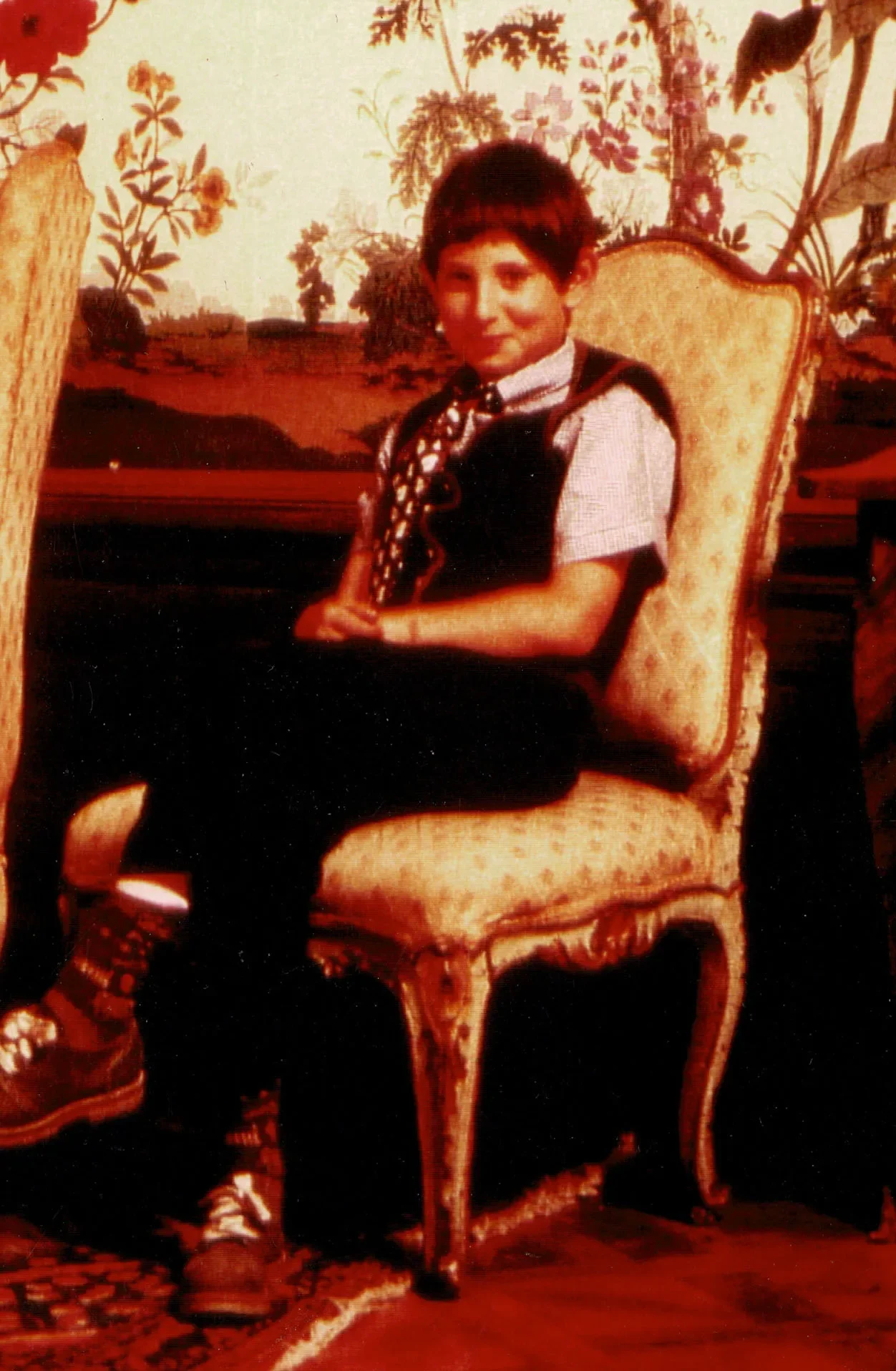
Riegersburg, 1990s. The neurodivergent heir, undiagnosed.
The data on giftedness and neurodivergence is still very incomplete. Some studies suggest it to be only a 2.5% overlap, while a recent study from 2024 showed a 85% overlap. The issue is that co-occurrence blurs the lines and makes diagnosis difficult.
Another problem is co-occurrence. Individuals who have 2 or more neurodivergent brain types will not fit into the classical diagnosis criteria. Till recently, diagnosis manuals did not even allow for co-occurring neurodivergent types. Basically, the different conditions can mask each other. Autism will mask some of your ADHD, and vice versa. AuDHD individuals are not as unorganized as ADHD individuals, and they are not as socially awkward as purely Autistic individuals. Just to name 2 examples. Similarly for dyslexia and dypraxia.
And remember, neurodivergence is on a spectrum — from very light to strong disposition— and thus, particularly people with not a very strong expression are often overlooked.
How do you spot neurodivergence in childhood heirs?
Ok, so how do you spot neurodivergence in your children? The earlier you can spot it, get them diagnosed, and then make sure to design their life appropriately, the better. While a late diagnosis is not the end of the world, it comes with horrible consequences, as we saw.
General Signs
The most common cross-condition in all neurodivergent brain types is a difficulty with social interactions. ADHD individuals will experience 20,000 more negative interactions than neurotypical individuals growing up. They struggle to make eye contact, to understand social cues, or to maintain conversations. They all struggle with sensory sensitivities (over- or underreacting to lights, sounds, smells, textures), I struggle with smells in particular, while lights and sounds are only a small issue. Or touch can be a struggle, I cannot sit in an airplane for long when my knees are pressed against the seat in front of me.
Repetitive behaviours or routines are also common across most brain types alongside intense special interests. Organisation and time management are also difficulties. They will lose track of time and be late frequently, and be disorganized, for example, not having the right books with them in class.
While neurodivergence is associated with distractability, children with adhd and autism can hyperfocus. Once they get into the zone, they will work away to amazing standards. However, this is only possible for tasks they are interested in. Often, they will work/play for hours without eating, drinking, or taking a break.
Dysregulated sleep, which is often overlooked. They might wake up frequently at night, have trouble falling asleep, or have erratic patterns. They might complain about a “noisy brain” or not being able to stop thinking. I remember at boarding school, my two best friends and I had sleep problems (probably all of us neurodivergent), and we would meet up to chat through the night, drink wine and eat cheese, which we would “import” into school unnoticed.
Meltdowns and shutdowns are also very common, as is a difficulty in handling negative feedback.
Autism-Specific Signs in Children
The earliest indicator is a difference in playstyle. They will play less imaginatively and have a preference for solitary play. Their play style will be very repetitive and they will focus on specific objects. A classic is lining up toys and categorising objects. Throughout my childhood, I had three things I played with: plastic toy soldiers, Play-Mobil and LEGO. Any other toys were of no interest to me. I would build whole towns and line up the toys. I would get rage fits if you cleared away my setup before I deemed it finished.
Autism comes with a particular difficulty in reading social cues, making facial expressions, and naming feelings. Also, autistic children are often late to walk.
Another telling sign of autism is when your child remembers a lot of precise information in specific fields. They won’t remember the name of their neighbor, but they will know Einstein’s theory of relativity at age 10. That is an extreme, but not uncommon.
ADHD-Specific Signs in Children
The classic sign of ADHD in children is hyperactivity. Note, however, while hyperactivity manifests through movement in boys, it will manifest through overthinking in girls. Emotional dysregulation is common with ADHD, so your child will experience emotions more intensely. They will be quick to cry, yet equally quick to joy — emotions arrive at full intensity in both directions. And your children will have an inability to sense time, often being late and frequently losing track of time without realising it is passing.
On the other hand, children with ADHD are very creative. Kind of the opposite to autistic children. They will imagine their own worlds and have imaginary friends. They will love to try new things and have ideas all day long.
I would create my own worlds that I would then build out with my toys — the combination of autism and ADHD. I would love to create battle scenarios for my toy soldiers to face, and I would of course be the heroic officer leading them.
Dyslexia-Specific Signs in Children
Children with dyslexia are often late to develop speech and have difficulty learning new languages. Rhyming is their absolute nightmare, and is often the first indicator noticed at school. They will also mispronounce words in consistent, patterned ways.
Dyslexia is fundamentally a visual-sensory challenge affecting reading. However, it will not affect other visual abilities. The children will often be good at sports, manual activities, and spatial reasoning.
Dyspraxia (DCD) -Specific Signs in Children
Dyspraxia primarily affects fine and/or gross motor skills, in contrast to ADHD which centres on attentiveness, impulsiveness, and hyperactivity. Children with dyspraxia often report difficulties with planning and organising tasks, sitting still for extended periods, sustaining focus, and transitioning between activities.
The Co-occurrence Problem
As you can see, it is difficult to spot the different brain types if they co-occur. Maybe before we move on let’s look at how they co-occur. Neurodiversity is primarily genetic. There isn’t one single ADHD, Autism, Dyslexia, or Dyspraxia gene. But it is believed that there is a collection of genes that can be put together into the bucket of “neurodivergent genes”. Depending on which of the genes in this bucket you have, your neurodivergence manifests differently. But do not fret, you do not need to diagnose the type of neurodivergence in your children. All you need to do is spot if they behave outside the norm and bring them to a professional for diagnosis.
How do you spot the adult neurodivergent heir?
If your child has neurodivergence, then I hate to break it to you, you likely have it, or your spouse. In other words, one of you has it for sure. So while it is important to spot this early on in your children, it is important to look at yourself critically. If your heirs are already adults, then this part of the article is for you.
General Signs of Undiagnosed Neurodivergence
The most consistent indicators in adults are patterns of executive function challenges, sensory sensitivities, social masking exhaustion, and a persistent, hard-to-name sense of being fundamentally different — particularly when these patterns have been present across an entire lifetime. Most adults who are neurodivergent know that they are different. Weird, awkward, intense, difficult, and peculiar are just a few words that have been used to describe them. They will constantly feel exhausted. Trying to live a neurotypical life will come with constant effort to maintain it, as it is counter to how they should be living.
"There is a particular kind of exhaustion that comes not from doing too much, but from spending years doing everything slightly wrong."
There is a particular kind of exhaustion that comes not from doing too much, but from spending years doing everything slightly wrong. For many adults, this understanding arrives in their thirties, forties, or fifties, in the form of a diagnosis that reframes decades of unexplained struggle
The standard advice given to struggling adults — build better habits, practise self-discipline, develop resilience — is predicated on a neurotypical baseline. For neurodivergent individuals, this advice does not simply fail; it can compound harm by reinforcing a narrative of personal inadequacy, when the problem lies in a structural mismatch between the person's neurology and the demands being placed on them.
Autism-Specific Signs in Adults
Key indicators include social communication differences, sensory sensitivities, a strong preference for routine and predictability, intense and narrow interests, difficulty reading social cues, a direct communication style that can be misread as bluntness or rudeness, stimming behaviours, and a lifelong sense of being out of step with social environments in ways that are hard to articulate.
ADHD-Specific Signs in Adults
In adults, lesser-known but highly impactful ADHD symptoms include emotional dysregulation, low motivation, impaired social skills, hyper-focus on selected tasks, and time blindness. These are constant, structural obstacles rather than occasional lapses. In older adults specifically, ADHD may show up less through hyperactivity and more through inattention, executive functioning challenges, mental fatigue, and difficulty following through on plans.
AuDHD (Combined Autism + ADHD) in Adults
Given the co-occurrence of autism and adhd is particularly high, it deserves its own header. They have a genetic overlap of about 50-72%. Children diagnosed with ADHD display autistic traits at a rate of 30–65%. Between 22% and 83% of children with autism meet diagnostic criteria for ADHD.
Having both brain types simultaneously can feel like a permanent internal tug of war. You love routine, yet novelty is important. You love to spend time alone, yet also want to meet new people. You say yes to parties, but in the hour before, you want to stay home. You want to spend time with people, but after an hour, you are exhausted. You love to get to know every detail in your special interests, yet you are a jack of all trades.
You might have been diagnosed with anxiety, depression, or a personality disorder. Yet none of them fit. Particularly, borderline personality disorder and Bipolar Disorder are often given. More devastatingly, Narcissistic Personality Disorder is also frequently misdiagnosed in this population. Complex PTSD overlaps significantly with AuDHD, and given how much trauma neurodivergent people accumulate growing up, the two frequently appear together.
Further forms of neurodivergence
In the article, I have touched on the four most common types of neurodivergence. However, there are many more that fall into this collective bucket. It is also important to note that nearly none of these appear in isolation. I want to briefly list the other lesser-known forms. Just because they are less common does not make them less important to spot. Always remember that all of these carry not just weaknesses but strengths and thus carry real potential for your heirs to excel.
Dyscalculia
Difficulty with numbers, arithmetic, and mathematical reasoning — not explained by low general intelligence. People with dyscalculia struggle with number sense, sequencing, telling the time, and managing money. Often missed because it lacks the cultural visibility of dyslexia, and because bright individuals can mask it through workarounds. Estimated to affect 3–7% of the population.
Dysgraphia
Difficulty with writing — not just handwriting, but the physical act of translating thought into written form. Can affect letter formation, spacing, speed, and the cognitive load of writing simultaneously with thinking. Often co-occurs with dyslexia and ADHD. Distinct from poor handwriting caused by lack of practice.
Tourette Syndrome / Tic Disorders
Characterised by repetitive, involuntary movements or vocalisations (tics). Tourette’s is the most recognised form, but tic disorders exist on a spectrum. Frequently co-occurs with ADHD and OCD. The popular image of uncontrolled profanity (coprolalia) affects only a small minority — most tics are far subtler and easily mistaken for nervous habits.
Sensory Processing Disorder (SPD)
Difficulty regulating and responding to sensory input — sound, light, texture, smell, taste, proprioception. Can manifest as hypersensitivity (overwhelmed by stimuli) or hyposensitivity (seeking intense sensory input). Highly overlapping with autism, but can occur independently. Not formally recognised in the DSM-5 as a standalone diagnosis, which contributes to it being missed.
Obsessive Compulsive Disorder (OCD)
Increasingly understood within a neurodivergence framework rather than purely as an anxiety disorder. Characterised by intrusive, unwanted thoughts (obsessions) and repetitive behaviours or mental acts performed to neutralise them (compulsions). The distress is not the ritual itself — it is the inability to stop. Frequently co-occurs with autism and ADHD, and shares some genetic architecture with both.
Hyperlexia
The early, self-taught ability to read — often before age five — that outpaces general language comprehension and communication skills. Associated with autism but can occur independently. The child can decode written language fluently while struggling to understand what they have read or to use language socially. A striking and often overlooked profile because the reading ability draws all the attention.
Dyscommunia / Pragmatic Language Disorder (also called Social Communication Disorder)
Difficulty using language in social contexts — not vocabulary or grammar, but the unwritten rules of conversation: turn-taking, staying on topic, reading the room, understanding implied meaning. Formally recognised in DSM-5 as distinct from autism, though it overlaps significantly. People with this profile often appear rude, blunt, or socially oblivious without understanding why their interactions go wrong.
Developmental Language Disorder (DLD)
Persistent difficulties with spoken and written language that are not explained by hearing loss, low IQ, or neurological injury. One of the most common neurodevelopmental conditions — affecting roughly 1 in 14 children — yet almost entirely unknown to the general public. Children with DLD struggle to understand complex sentences, retrieve words, and structure narratives. Frequently mistaken for general slowness or a lack of effort.
Meares-Irlen Syndrome (Visual Stress)
A perceptual processing condition affecting how the brain interprets visual information — particularly text on a page. Causes symptoms including print distortion, sensitivity to contrast and fluorescent light, headaches, and difficulty tracking lines of text. Often co-occurs with dyslexia but is distinct from it. Responsive to coloured overlays or tinted lenses, which can dramatically improve reading comfort and speed.
Pathological Demand Avoidance (PDA)
A profile increasingly recognised within the autism spectrum, though contested diagnostically. Characterised by an extreme, anxiety-driven avoidance of everyday demands and expectations — including ones the person wants to meet. The avoidance is not wilful defiance but a neurological response to perceived loss of control. Children and adults with PDA often appear manipulative or oppositional; the underlying driver is anxiety. Particularly relevant to heir education, where demands and expectations are structurally high.
Acquired Neurodivergence — Traumatic Brain Injury (TBI)
Worth including because it appears in criminal justice data and family systems. Brain injury acquired after birth — through accident, illness, or trauma — can produce profiles that look functionally similar to developmental neurodivergence: impulsivity, memory difficulties, emotional dysregulation, and executive dysfunction. In prison populations, rates of TBI are extraordinarily high. In family systems, unrecognised TBI in a family member (from sport, accident, or substance use) can look like character deterioration or moral failure.
Final Words
We covered a lot in this article. All of it is important information to help you spot if your heir might be neurodivergent or not.
"We cannot change how the outside world works. But we have full control over our home."
Spotting this can be life-changing for your heir and thus your family. It will reduce a great deal of unnecessary friction in their development. A safe home is paramount for their development — I say this from experience. After all, we cannot change how the outside world works, but we have control over our home.
If this piece helped you see something you had not seen before, send it to someone who needs to read it. A parent. A family advisor. A patriarch who has been calling it character for twenty years. This information changes outcomes. It changed mine.
Links to the statistics:
80% of neurodivergent adults remain undiagnosedhttps://www.earlyyears.tv/neurodivergent-signs-adults/
42% of autistic adults meet criteria for anxiety disorder / 37% for depressive disorder / 50% of ADHD adults have at least one co-occurring psychiatric conditionhttps://www.psychologytoday.com/us/blog/the-late-diagnosed-mind/202603/the-late-diagnosed-mind-adhd-and-autism-in-adults
Meta-analysis of 80 studies — 34.2% suicidal ideation / 24.3% suicide attempts / 8x higher risk of death by suicidehttps://link.springer.com/article/10.1007/s40474-024-00308-9
Male AuDHDers 1 in 10 suicide attempt rate / females 1 in 5https://sparkforautism.org/discover_article/autism-suicide-risk/
25% of prisoners meet ADHD criteriahttps://bmcpsychiatry.biomedcentral.com/articles/10.1186/s12888-018-1858-9
16-19% autistic traits in prison / neurodivergent conditions three times more common in criminal justice system than general population / ~50% of inmates have dyslexiahttps://www.penalreform.org/blog/understanding-and-supporting-the-needs-of-neurodivergent-people/
60% ADHD rate among incarcerated youthhttps://www.prisonpolicy.org/blog/2025/08/19/youth-victimization/
2.5% to 85% overlap between giftedness and neurodivergencehttps://www.mdpi.com/2413-4155/6/2/23
Genetic overlap of 50-72% between ADHD and autism / 30-65% of children with ADHD display autistic traits / 22-83% of autistic children meet ADHD criteriahttps://neurodivergentinsights.com/adhd-vs-autism/https://www.nationalgeographic.com/health/article/what-is-audhd-adhd-autism-overlap-adults
Dyscalculia affects 3-7% of the population:
https://www.understood.org
DLD affects roughly 1 in 14 children
RADLD (Raising Awareness of Developmental Language Disorder): https://radld.org
20,000 Negative interactions
Source: CHADD (Children and Adults with Attention-Deficit/Hyperactivity Disorder) https://chadd.org/adhd-weekly/use-summer-to-improve-your-parent-child-relationship/