The Grey Eminence
The most overlooked force in dynastic continuity.
In the previous pieces, we have focused mostly on the heir and their preparation. While this topic still has a ways to go, the grey eminence deserves some discussion. The grey eminence serves a crucial part in heir perperation. They can be an enormous force of good in a family’s trajectory, yet at the same time, they can do a lot of damage.
What distinguishes the grey eminence as a force of good from the damaging one? What can principals do to prepare themselves for being the grey eminence? What can heirs do to support this transition? These are just some of the topics that we will cover today.
What is the Grey Eminence?
Not every family will have a grey eminence. However, they are becoming increasingly common. With better longevity, particularly in wealthy families, we often see 3, if not even 4 generations alive at the same time. Which I like to categorise as the rising generation, the next generation (the heirs), the now generation (principals, patriarchs and matriarchs) and the past generation (the grey eminence). Now the past generation is the generation that was previously in power and leadership, but has let go of it. They often enter retirement (ok, let’s face it, an entrepreneur will never retire), or enter a new phase in their life. So in terms of a family business, they used to be the CEO and shareholder, but have relinquished responsibilities. I had this case with my father, where I had the estate handed over to me while he was still alive.
In case you want to research this topic, you will have to keep other frequently used terminology in mind: predecessor, incumbent, retiring generation, outgoing leader and shadow emperor.
What role can the Grey Eminence play?
The grey Eminence can play several roles. And even though they have relinquished power and control, these roles are important. In successful families, the grey eminence is put to good use. Often, they take a role in educating the rising and next generations. They are often the chief storytellers or archivists. Some will take up philanthropy as their main focus. They are still a beacon of leadership, while not having authority with great influence. Stakeholders will still look to the old leadership. And that is where the grey eminence has an important role in supporting the new leadership. Some, if they can manage to stay out of the day-to-day, may still have an advisory role. Others need to step away entirely.
So in broad terms, the grey eminence can play a positive/supportive role or they can have a negative/destructive role. And in some cases, they may opt to have no role at all. However, the important caveat is that you can determine if your predecessor is toxic or supportive by assigning them the right role. The research by both Sonnenfeld (1988) and Cadieux (2007) supports this. If you want the grey eminence to be destructive, make sure they leave their position with no constructive role in place. More on this later.
The Grey Eminence as a Role Model
The most crucial role of the grey eminence is to serve as a role model. Again, this can be negative or positive. Now, this role may stay long into their passing. Often, predecessors and their lives serve as vital stories for families. Isabell Stamm has researched this and found that the grey eminence has a crucial role as a storyholder. Thi sis also supported by research from Nadine Kammerlander on the importance of grandmothers as role models in the family. I remember from my own childhood that I would not listen much to the stories my parents told me. However, the same stories told by my grandmother had me glued ot her lips. I only had one grandparent growing up, so at some point, I did listen to the stories about my other grandparents told by my parents. But they did not carry the same gravitas as hearing them directly from the grandparents. The grey eminence has a natural position of authority and influence in the family. And outside the family, they still hold influence.
The Grey Eminence as a Legitimacy Anchor
The next role of the grey eminence is to serve as a legitimacy anchor. By receiving the support of the grey eminence, the new leadership automatically gains legitimacy. The negative side is evident, that if the grey eminence intervenes in leadership from the sidelines, it robs the new leadership of legitimacy. I have experienced both sides of this with my parents. At times, they would be supportive, and sometimes they would intervene. I would feel the difference. Not just slightly, but enormously. And from talking to other heirs who took on the reins, I can summarise that those who had the unconditional support had an amazing transition. And those who did not would rather not have had their predecessors involved at all. The constant tug of war with the predecessor and never knowing whether they support or not is exhausting. This is what we would describe as a frenemy. So in a 50/50 scenario, I believe the grey eminence should step away entirely. The social legitimacy piece is real and important.
The Grey Eminence as a network bridge
The predecessor will have built a strong network in their years of leadership. Now, handing this network over is not easily done and usually will not work. This is where the grey eminence can stay positively involved. They can tap their network in support of the new leadership. This is part of the social capital that they built and nourished in their time. Just think about yourself, and any partner you work with. For example, your wealth manager. Do you like your client advisor to change? How comfortable are you with the new guy? How long does it take for you to build the trust level you had with the previous? This is where real strength lies in the grey eminence. The industry connections they made are worth their weight in gold.
The grey Eminence as a tacit knowledge carrier
This point is often also vastly underestimated. The grey eminence carries years of experience and knowledge. They are a treasure trove. This experience and knowledge can serve as a crucial role in advising the new leadership. As long as they advise but do not intervene. They will know the industry well and everyone important in it. They will have negotiating experience and understand market dynamics. They know family history (as discussed earlier). Or often they will have other specific knowledge that contributes directly to your family’s secret sauce. They have seen market bear and bull runs and their effects over longer time frames. While sometimes they might not go with the times and struggle with how things are changing, you can turn to them for timeless wisdom. In some things, it would have been good to listen more to my father’s advice. In other cases, it was good that I did not listen to his advice. One example was his scepticism of cryptocurrencies (I was early). But when he was giving me advice on the dynamics in the local commune and who I could trust and who not, he had this learnt the hard way over 30 years. I should have trusted this more.

Photo by Daniel Forsman on Unsplash
The Grey Eminence as the innovation enabler
Now this is counterintuitive and surprising for most of you. Firms, particularly family businesses where the grey eminence stays positively involved, tend to be more innovative. This is probably due to the above reasons. The sooner the new leadership gains legitimacy, the sooner they can push change in the firm. Not only that, but support from the grey eminence means they also carry more weight, and there is less headwind. And the continuous access to the knowledge they carry also supports the new leadership in making innovative decisions faster. This is because they have a better understanding of problems due to the knowledge exchange. I can attest to this. When the relationship to the grey eminence is bad, the knowledge transfer is hindered. Not only will you have to reinvent the wheel constantly, but you won’t be confident in making changes early. I had this case, and it was soul-crushing.
What distinguishes the positive from the destructive Grey Eminence?
Involving the previous leadership generation well into retirement is a two-sided strategy, as we mentioned already. Whether this works well or not is dependent on how they are involved and how the transition is constructed. So in short, the grey eminence is not inherently constructive or destructive; it depends on the conditions.
Shadow Emperors vs Loyal Paladins
Breaking it down, it depends on the motive of continued involvement. We can discern between altruistic motives and transactional motives. One leads to the creation of a “shadow emperor” who influences decisions and operations without any repercussions for them. The other leads to a “loyal paladin” who safeguards the family’s legacy, mentors and supports the successor and focuses on continuity. Did you guess which one it is correctly? The altruistic motives produce loyal paladins and the transactional motives produce shadow emperors. But what is the determination for either of these motives? According to Ahrens, Uhlaner, Woywode, and Zybura the main factor is how intertwined the predecessor’s identity is with the family legacy or the company legacy. In other terms, can the grey eminence see themselves as separate from the family wealth or not? If they cannot the will see the successor as a threat. If they can, they will support. I had to learn this with my parents. What may seem like malice on their side is actually a threatened identity. We did not do the work to prepare them. We had a forced succession, and thus, the identity work and preparation of the grey eminence did not take place.
The four Predescessor Archetypes
According to Sonnenfeld there are four predecessor archetypes. The Monarch, the General, the Ambassador and the Governor. The monarch will not relinquish his position of power and leadership; they will stay in it till they drop dead, literally. Or the family needs to overthrow them forcefully. The general will relinquish his position grudgingly, but plotting to have a comeback, essentially becoming a shadow emperor. Ambassadors are the loyal paladins; they stay actively engaged and retain an advisory role. While governors willingly serve a limited time, when their term is up, they exit cleanly and without any further engagement. They are the ones who usually prepare their successor while they are still in power and then have a clean exit. However, this can leave a power vacuum, especially if the family cannot find a successor during the overnors term in power.
The psychology of the Grey Eminence
Conflicts often arise after the transfer mainly because of the incumbent's lack of trust in the successor, inappropriate communication, changes in business strategy and leadership style, the incumbent's reluctance to cede informal power, and continued interference in the successor's important decisions. Continued predecessor involvement can be based on reasons like wanting to ensure family harmony and helping the new successor. There can also be personal reasons such as not fully trusting the successor, lack of alternative activities, and reaffirming self-worth.
The destructive grey eminence typically has no alternative identity to inhabit. Give them no role and they will invent one — usually a destabilising one. Give them a defined, bounded, meaningful role and you channel their energy constructively.
The Transition from Principal to Grey Eminence.
The successor plays a key role in this dynamic. So preparing your heir means that you need to prepare them for this as well. How to handle the predecessor —which often is yourself — after succession. The succession is more like a dance than handing over the baton at a race. When the successor performs autonomously and entrepreneurially, the incumbent perceives a higher level of threat and thus increases control over the successor. The very competence that earns the heir legitimacy in the outside world can trigger the predecessor’s instinct to reassert authority. This creates a trap: the heir who leads strongly and independently may inadvertently activate the shadow emperor. The heir who leads timidly to avoid conflict keeps the peace but fails the family.
First of all the current leadership needs to be prepared for their new phase in life. A leader or entrepreneur cannot simply enter retirement. They will get bored and feel a lack of purpose. Identity work needs to be done to untwine their identity from the business or wealth. You do not want them to enter an existential vacuum after relinquishing. If the vacuum does not lead to them getting involved toxically again, it can lead to depression and addiction instead. So you work together with the leaving leadership on their future potential roles and new purpose in life. We have discussed options already.
Secondly, the successor’s behaviour in the process is essential. A successor who is attentive to the founder's emotional difficulties with succession is more likely to react constructively to attempts by the founder to interfere with the transfer of power. By being firm and supportive rather than adversarial, the successor-to-be may help the founder to take the necessary steps. Something that I have not been able to do with my father. We had moments of adversarial fighting and some of it was due to my handling of his continued attempts to be involved. I often lacked the understanding. Give you an example, we had someone from the village bypass me (on purpose) to ask my father if he could use one of our properties to store something momentarily (which of course did not stay momentarily). My father said yes to it. He was thinking that he would protect me from such a mundane request. But it undermined my authority within the commune. I got angry, which deteriorated the relationship. While my father overstepped, he did not do it out of malice. However, these dynamics create malicious interactions down the line. So what you want to do is to draw a firm line, but politely, while at the same time communicating appreciation of support. And then you need to give the predecessor specific tasks to work on and engage in. Things that make them feel valuable and that are also valuable to you. If you try to give them unnecessary tasks, they will see through it, after all, they led for years before you. I had success with the prior and no success with the latter.
Thirdly, the secret lies in creating trust before the succession. The more the predecessor trusts the successor, the better the transition. Working side by side for a few years before works well. So if you are a patriarch or matriarch, give your heirs ample opportunities to demonstrate their competence to you. This will earn trust. If you are an heir, make sure you demand those opportunities, and you willingly take them on when presented to you.
Predecessors need three things to conditions to become constructive: trust in the heir, predefined alternative roles and a tolerance for uncertainty. The first two, a successor can actively shape, and the latter would usually be the case from a predecessor, although not necessarily.
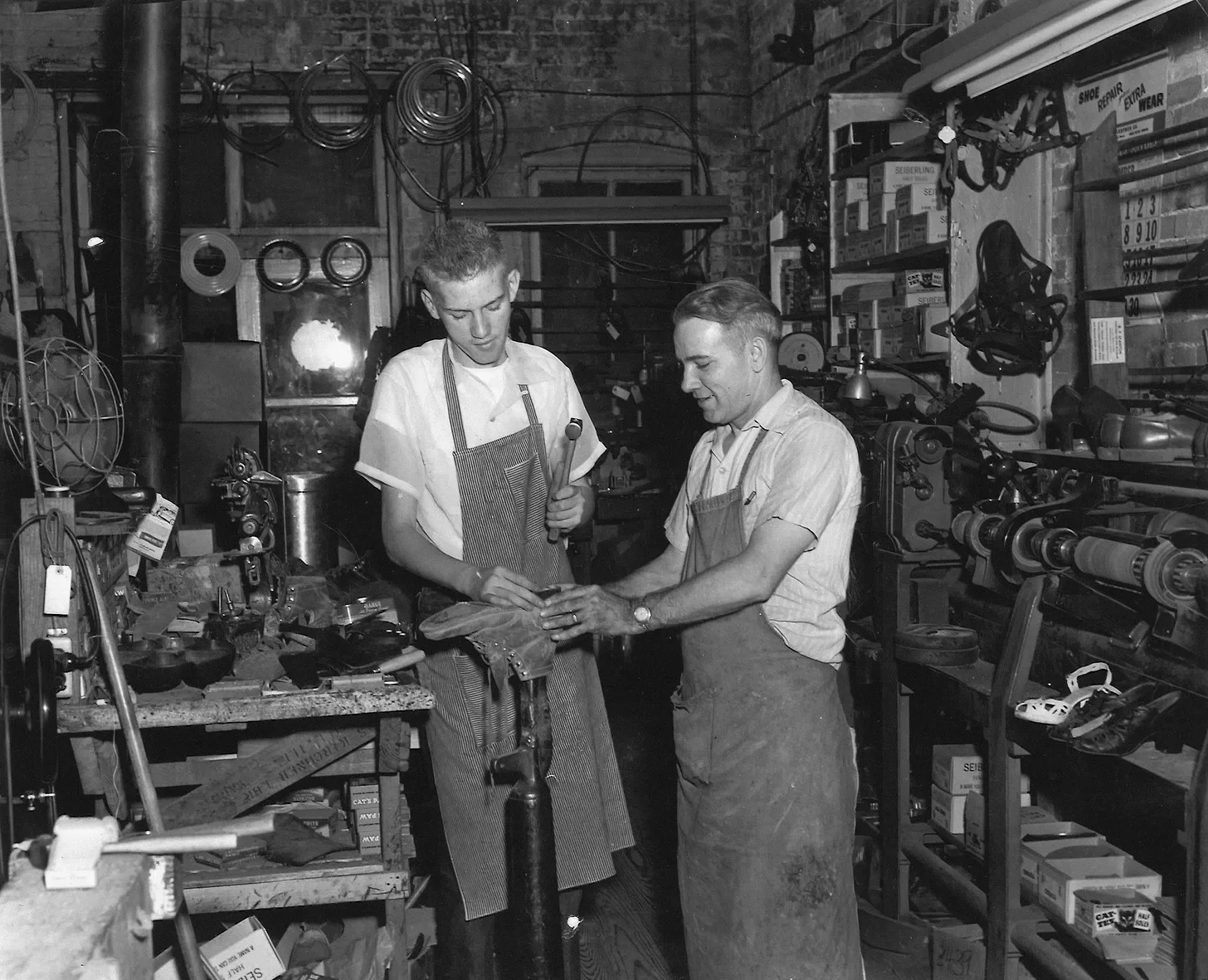
Photo by Marshall Public Library on Unsplash
Finishing words
From personal experience and from research, once you start on the path of deteriorating relationships, it is a self-reinforcing spiral downwards. Every time the successor treats the predecessor badly, barriers are built by the predecessor, which leads to bad treatment of the successor. This leads the successor to put up barriers, which leads to worse treatment of the predecessor. And so on and so on. If you realise that you are on this path, stop there right now. Don’t let it go any further.
As you saw in this article, there are clear strategies around this. And you can prepare beforehand for this important transition.
Academic Resources:
Ahrens, J-P., Uhlaner, L., Woywode, M., & Zybura, J. (2018). “Shadow emperor” or “loyal paladin”? — The Janus face of previous owner involvement in family firm successions. Journal of Family Business Strategy, 9(1), 73–90.
Cadieux, L. (2007). Succession in small and medium-sized family businesses: Toward a typology of predecessor roles during and after instatement of the successor. Family Business Review, 20(2), 95–109.
Caykoylu, S. (2019). Retired yet involved: How even after the succession predecessor involvement influences the family business. International Journal of Business and Management, 14(2).
Gagné, M., Wrosch, C., & Bhave, D. P. (2011). Retiring from the family business: The role of goal adjustment capacities. Work, Aging and Retirement.
Kammerlander, N., Bagger, E., Sommavilla, D., & Lund, S. (2021). The making of successful female family-enterprise leaders. Entrepreneur & Innovation Exchange. DOI: 10.32617/676-610ea0737f40c
Li, X., et al. (2023). Identities of the incumbent and the successor in the family business succession: Review and prospects. Frontiers in Psychology. DOI: 10.3389/fpsyg.2023.1062829
Sonnenfeld, J. A. (1988). The Hero’s Farewell: What Happens When CEOs Retire. Oxford University Press.
Sonnenfeld, J. A., & Spence, P. L. (1989). The parting patriarch of a family firm. Family Business Review, 2(4), 355–375.
Stamm, I. (2013). Unternehmerfamilien: Der Einfluss des Unternehmens auf Lebenslauf, Generationenbeziehungen und soziale Identität. Barbara Budrich Verlag.
Stamm, I. (2016). Erzählkultur in Unternehmerfamilien. In Handbuch Unternehmertum.
Zybura, J., Ahrens, J-P., Istipliler, B., Woywode, M., & Kowalzick, M. (2021). Innovation in the post-succession phase of family firms: Family CEO successors and leadership constellations as resources. Journal of Family Business Strategy, 12(2).