The Spouse Fatality
The Asset Most Families Mistake for a Threat
Spouses are among the most feared and debated topics in business families.
The topic is so emotionally charged that in many cases, spouses disrupt families and their dynamics. However, this needn’t be the case. It leads to much hurt in families. Not only for the spouses, but also for the heirs and their children. It can cause intergenerational trauma and contribute to a slow crumbling of wealth.
Why is this topic so charged? How do most families go about it? What do the successful families do differently? What can we learn from history on this topic?
The Spouse Perceived As A Great Risk
The most common perspective I come across in families is that spouses are a risk to be managed. While every family member poses a risk for the family system, every family member also brings opportunities. Whether a family member becomes a problem or an asset is starkly dependent on how they are viewed. After all, the family is often the secret sauce of a family’s success. Each member has a unique set of skills, experiences, and thinking. Each can be applied productively. The same holds true for the spouses. And I believe even more so. Spouses come from the outside; they bring new perspectives to the family. They are often not afraid to question processes, systems, and traditions — a healthy exercise.
Yet the industry of family advisors pushes anti-employment and anti-ownership clauses in family constitutions. Not only that, but often also extreme prenup agreements, which add to inequality in marriage. Many families are often even emotionally and culturally not accepting of spouses, particularly when they are not up to the family’s expectations. Behaviour towards them becomes toxic, and this spreads throughout the family.
Many families are worried about the “gold digger” spouse, who is after their financial wealth. This fear is exploited by the industry to sell trusts and prenup agreements. They have their place, but are often put in place for the wrong reasons.
Why Spouses Cannot be Managed Away
You can remove the spouses' official authority. You can forbid them from holding shares in the family ventures. You can forbid them from working in any of the family ventures. You can isolate them financially with a prenup. In some jurisdictions, you can forbid them from inheriting anything from the family wealth. However, you cannot take their influence from them. You are keeping them out of the boardroom and the business, but they are still at the dinner table and the bedroom. More importantly, they are still the parents of the heirs.
This is, of course, a question of character; however, in most cases, there will be pushback from the spouse. The more you try to manage them, the paradoxically more the opposite result you will have. Also, their children will watch intently how their parents are treated. This will breed contempt for the rest of the family and often the family wealth. We have had several cases like this in our family. And with every time this happened, the fracture became worse. One example in my grandmother’s generation, where one of the husbands (they were four daughters) was not treated well by my great-grandmother. This contributed to the decision to split up the family estate, which, since then, has continued on down the generations.
The more you isolate the spouse, the higher the risk of family fracture.
Examples from History
There are many great examples in history. Both for the dangerous spouse and for the hero spouse. We will analyse a few examples to get a good feeling for what works and what doesn’t.
Positive Examples
Karolina von Metsch — My Own Family (1728)
In 1728, my ancestor Johann Joseph Khevenhüller married Karolina, the daughter of the Imperial Vice-Chancellor of the Holy Roman Empire, Count Johann Adolf von Metsch. Her father had died without a male heir. She was the last of her line.
What she brought to the marriage was not merely a dowry. She brought a name, a title, and the accumulated standing of one of the great houses of Vienna. With the Emperor’s personal permission, her husband combined his family name with hers. The house of Khevenhüller became Khevenhüller-Metsch. The princely elevation that followed in 1763 — the highest title in the Habsburg empire — stems directly from that marriage.
My grandmother, Marianne, who carried that name into her marriage to my grandfather Gotthard Graf Pilati, inherited a dynasty that Karolina had built. Without Karolina, there would be no Khevenhüller-Metsch. The name would not exist. The title would not not exist. Three centuries of family identity trace back to one woman who arrived in a marriage with no male competition in her line — and one family clear-eyed enough to receive her as what she was: not a risk, but a recapitalisation.
This pattern repeated itself in my family more than once. It was not coincidence. The spouse was the instrument of dynastic growth. That is what a well-chosen marriage looks like from the inside of an 1000-year family.
Blanche of Castile — The Woman Who Saved France (1188–1252)
Blanche of Castile arrived in France at twelve years old, a Spanish girl sent across Europe to marry the French heir. By every measure the advisory class would have recognised, she was a liability: foreign, culturally alien, with no established loyalty to the crown she was entering. The French barons certainly saw her that way.
When her husband Louis VIII died unexpectedly in 1226, leaving a twelve-year-old king and a kingdom full of opportunistic nobility, her position looked catastrophic. She had no formal power, no military command, and no precedent for what she was about to do.
She twice saved the dynasty in the years that followed — first by holding the realm together during her son’s minority against a coalition of barons who saw a widowed queen as an invitation, and then again by governing France with full competence while her son led a crusade abroad. The historian Robert Fawtier, not prone to exaggeration, wrote that she may be counted among the kings of France in all but name.
The son she raised became Louis IX — Saint Louis, the only French king ever canonised, the foundation of French royal prestige for generations. The character she built in him, the values she instilled, the governance she modelled — these were her contribution to the dynasty. Not as a passive support system. As its primary architect for thirty years.
The family had received a twelve-year-old Spanish girl as a political instrument. What they actually received was the person who would hold the crown together when no one else could.
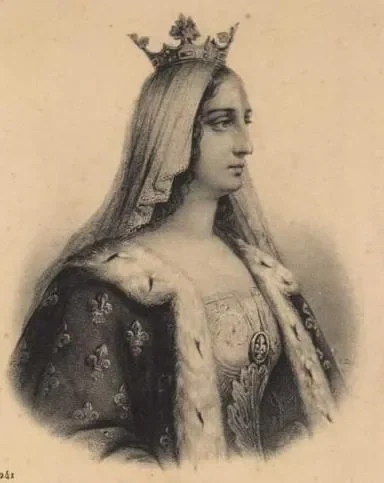
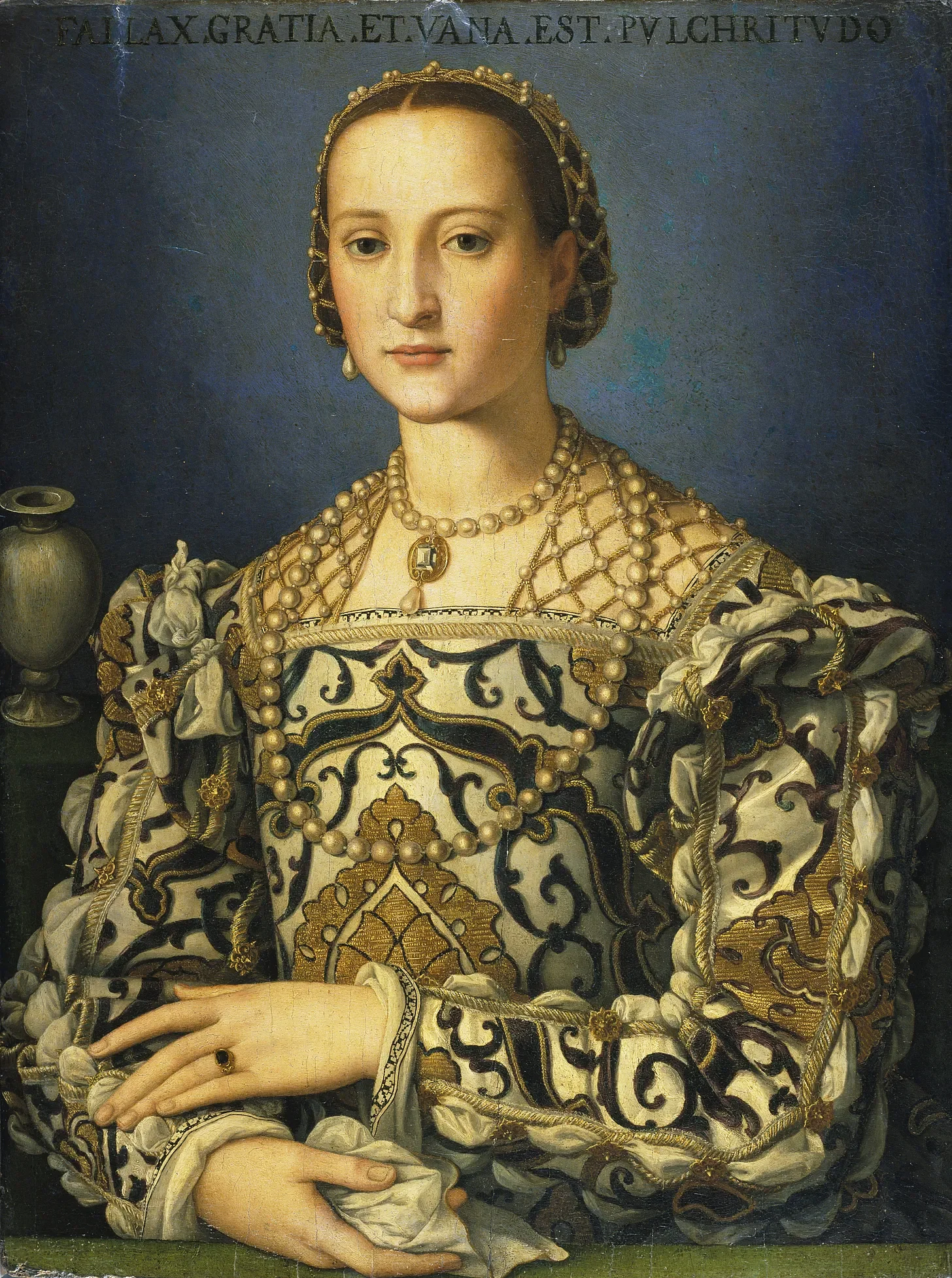
Eleanor of Toledo — The Medici’s Most Important Investment (1522–1562)
The Medici were not born a ruling house. They were a commercial dynasty that built itself into one — which makes Eleanor of Toledo’s contribution to the family especially instructive for the families I work with today.
Eleanor was a Spanish noblewoman who married Cosimo I de’ Medici in 1539. Her social standing was itself strategically valuable: Spain dominated Italy, and her lineage gave the Medici a political anchor at the court that mattered most. But what she brought went well beyond bloodline.
She was an independent financial operator of a kind rare for any figure of the period. Using capital from her own dowry, she personally managed real estate investments and made decisions with a degree of autonomy that most male contemporaries would not have attempted. In 1549, she purchased the Pitti Palace — with her own funds, not Cosimo’s — and transferred it to the family. The Pitti Palace, which became the principal residence of the Medici grand dukes and remains one of Florence’s defining buildings, entered the family’s patrimony through a spouse’s independent financial judgment.
In Cosimo’s frequent absences she managed the court and the family’s affairs with the competence of a trained administrator. She served as a diplomatic conduit to Spain, a network the Medici could not have purchased at any price.
The Medici treated her as an asset from the day she arrived. The return on that decision — in property, legitimacy, and access — compounded for generations. The Pitti Palace alone makes the argument.
Helen Walton — The Woman Behind Walmart (1919–2007)
Sam Walton is one of the most studied entrepreneurs in American business history. His wife Helen is rarely discussed in the same breath. This is a mistake.
The Walmart dynasty — today the world’s largest private employer and a family worth over $440 billion — traces its founding conditions directly to her in ways Sam himself documented. The first store opened in 1945 with a $25,000 loan from Helen’s father. Without that capital, there is no first store, and no story to tell.
When Sam was considering his next move after losing the Newport lease, he was weighing a partnership in St. Louis. Helen refused. She was a small-town girl from Oklahoma and would not live in a city of that size. Her refusal is the reason Walmart became a small-town retailer rather than an urban one — a strategic identity that defined everything that followed. The most consequential retail geography decision in American history was made at the dinner table.
She also gave the company its governance architecture. Her father had organised his own ranch and family holdings as a formal partnership, with all his children as partners. She brought that model to the Walton family, and in 1953 Sam established what would become Walton Enterprises — the ownership structure that holds one of the largest private fortunes in history to this day. In his own autobiography, Sam said plainly that he would not have arrived at that structure without her.
The profit-sharing plan that became Walmart’s cultural signature — the policy that turned employees into stakeholders and built the loyalty that underpinned the company’s expansion — was Helen’s idea. Sam says so in writing.
She was a business degree holder at a time when that was genuinely unusual for a woman. Sam called her one of his best business advisors. The record agrees with him.
Lady Bird Johnson — The Fortune No One Credits (1912–2007)
Lady Bird Johnson is remembered for wildflowers and highway beautification. She should be remembered as one of the most capable business builders in twentieth-century American history.
When she married Lyndon Johnson in 1934, he was a congressional aide with political ambitions and no money. She financed his first congressional campaign from her own inheritance. When he enlisted in the Navy during the war, she ran his congressional office. In 1943, she spent $17,500 of her own inheritance to purchase KTBC, a failing Austin radio station — a station that was losing $600 a month and operating on a fraction of its licensed power.
She went in person, pored over the books, identified the failures, fired the staff, and rebuilt the operation from the floor up. Within months she had turned a loss into a profit. Over the following decade she expanded into television — over Lyndon’s explicit objections, reminding him that she could do as she wished with her own capital. The television franchise she acquired became Austin’s monopoly VHF licence, generating revenues that made the Johnsons millionaires while Lyndon was still a senator.
Her initial investment of $41,000 became more than $150 million for the LBJ Holding Company. She was the first president’s wife to have become a millionaire in her own right before her husband reached the presidency. The political career that took Lyndon Johnson to the White House was underwritten, structurally and financially, by the business his wife had built.
There is a version of this story told in most biographies where Lyndon is the protagonist and Lady Bird is the supportive presence in the background. The financial record tells a different story entirely.
Negative Examples
The Gucci Family — The Cost of Exclusion (Italy, 1972–1995)
The Gucci family story is usually told as a cautionary tale about a dangerous woman. I want to tell it differently.
Patrizia Reggiani married Maurizio Gucci in 1972. From the beginning, his father Rodolfo regarded her as a social climber and refused to attend their wedding. She was tolerated within the family, never welcomed. She raised two daughters, built her life entirely around the Gucci identity, and operated for over a decade as the wife of the man who would eventually run the house.
In 1985, Maurizio ended the marriage without the dignity of a direct conversation — he claimed to be travelling to Florence on business, and sent a friend to inform her it was over. The divorce stripped her of everything: the marriage, the name, the status, the identity. She was legally forbidden from calling herself Gucci. She continued to do so anyway, saying she felt like the most Gucci of them all. That sentence tells you everything about what the exclusion had created.
Her own words, given years later, explain the murder more precisely than any legal judgment: “Losing the family business. It was stupid. It was a failure. I was filled with rage, but there was nothing I could do. He shouldn’t have done that to me.”
She arranged his killing in 1995. The family, already fractured by internal legal warfare between branches, sold the last of its ownership shortly after. Gucci is today owned by the French conglomerate Kering. The family no longer owns the house that bears its name.
The lesson here is not that Patrizia Reggiani was dangerous. The lesson is that the family spent twenty years creating exactly the outcome it feared. A person who has been included, excluded, used, and discarded is not a threat that arrived from outside. She is a threat the family built, through decades of decisions about how to treat a spouse.
The Pritzker Family — Exclusion Built Into the Architecture (USA, 1995–2005)
The Pritzkers are a less dramatic case than the Guccis. They are also, for the families I work with, a far more instructive one — because what destroyed the dynasty was not a murder. It was a governance decision, made calmly and deliberately, about spouses.
By the mid-1990s, the Pritzker family controlled approximately $15 billion in assets — Hyatt Hotels, the Marmon Group, and a network of hundreds of trusts. On June 5, 1995, patriarch Jay Pritzker called the family together to map its future. The meeting included Jay’s wife, his children, and various cousins. Spouses were not invited. The exclusion was not an oversight. It reflected a family culture in which secrecy was the norm, voices were not heard equally, and the boundaries of who counted as family had been drawn tightly around blood.
The immediate consequence came from within that culture. Robert Pritzker, navigating a contentious divorce from his wife, emptied the trust funds of his own children, Liesel and Matthew, transferring assets to cousins at below-market value. The divorce — itself the product of a family that had never given spouses a genuine stake in the system — became the mechanism through which the dynasty’s architecture began to unravel.
Liesel and Matthew sued. They each received approximately $450 million in settlement. That resolution triggered the broader agreement that broke the entire enterprise apart — eleven cousins dividing a $15 billion empire that three generations had built. A Columbia Business School case study on the Pritzker collapse ends with a question that is rarely asked in advisory circles: what does the outcome tell us about the family culture, and the roles of other family members — including spouses?
The advisors who designed the 1995 meeting thought they were protecting the dynasty by keeping spouses out of the room. They were, in fact, building the conditions for its dissolution.
Sumner Redstone — The Vacuum Exclusion Creates (USA, 2014–2019)
The Redstone case is the one the advisory industry most often cites when making the argument for spousal risk management. It deserves to be read more carefully.
Sumner Redstone controlled Viacom and CBS — Paramount Pictures, MTV, Comedy Central, Nickelodeon — a media empire worth several billion dollars. He had spent years publicly humiliating his daughter Shari, questioning her competence in press interviews, and maintaining a relationship with his legitimate family that his own employees described as exchanging subpoenas for Christmas. The family had not been excluded by accident. The patriarch had actively pushed them out.
Into the vacuum that created came two intimate companions with no legitimate claim on the empire and no accountability to anyone. Together they extracted more than $150 million from Redstone’s accounts during the years they had access to him, almost gained control of his succession, and plunged the governance of two publicly traded companies into a years-long legal and reputational crisis.
The framing that followed — dangerous women, predatory companions, the threat of the intimate partner — missed the structural point entirely. The threat did not arrive from outside. It filled a space the family had created by removing itself. A patriarch with functioning family relationships, with a daughter who was genuinely integrated into the enterprise’s governance, does not become the target of a $150 million extraction scheme. Not because the predators aren’t there. But because there is no vacuum for them to occupy.
Shari Redstone eventually prevailed, stabilised the empire, and merged ViacomCBS into what is now Paramount Global. She did so despite years of public dismissal by the man whose legacy she ultimately protected.
The advisors who counsel families to manage the spousal risk are not wrong about the risk. They are wrong about its source. In the Redstone case, as in the Gucci case, as in the Pritzker case, the risk did not walk in from outside. It grew in the space the family left empty.
This took 1000 years of family history to understand. It takes one click to pass on.
Strategies For Engaging Spouses
The best way to handle spouses is by proactively engaging them. Accept them with open arms. You might not like them. You might not approve of your family member’s choice in partner. They might not have the skills or experience you expect. However, ultimately, it is not your choice to make. You need to learn to work with what you have. Just like you have to in your entrepreneurial ventures or investments. It is another card that life has dealt you, outside of your control. Some families run a spouse through a family introduction course. Whatever is missing, they will learn. This can include family history, financial literacy, social etiquette, industry knowledge or company internships. In-laws will raise the expectation of doing the course before an engagement. Not to scare them away, but to make clear that there are responsibilities that come with joining the family. And they clearly communicate the expectations of the spouse to work hard.
A spouse is a new member to join the family. They will bring new ideas, different perspectives, new knowledge, and experiences. All of this can be harnessed for the good of the family. If a spouse is competent, why forbid them from working for the family ventures? The same goes for them becoming shareholders. I know of examples where the spouses inherited the family estate, exactly because they were more competent than the heir. And due to this, the estates were preserved for the rising generation.
In financially unequal relationships, which are more common these days than they used to be, it is crucial to work on this inequality. Instead of frowning upon it, facilitate conversations between the couple. If need be, engage a money coach to work with them on this. From my own experience, not addressing this is disastrous for a relationship and takes a lot of work to fix afterwards. It is better to get a hold of this as soon as possible.
Prenups have their place and are needed as a protective tool. However, there is a difference between a fair prenup and an unfair prenup. Make sure that the prenups are fair. That the time and energy a spouse puts into the family is fairly remunerated. The higher a family’s financial wealth, the lower the rate of divorce. Some may argue that this is due to the strict prenups and the little incentive to get divorced. However, an unhappy marriage that is only held together because of money, is a bigger long-term risk for the family. Unhappy marriages breed fragile heirs. They breed addiction, affairs and irrational decision making. Also, the best tool against a divorce is to treat each other with respect and to acknowledge each other. If you want the spouse to contribute positively to the family, there is no other option.