How to Antifragile a Family's Human Capital - Part 2
How to create Antifragile Human Capital as a Family
In the last edition, we looked at what each individual can do to support the endeavour of a family becoming antifragile in their human capital. This time, we will look at what a family can do to support the individuals and the family unity. To start off we need to stress that in reality, you will not have a collection of antifragile individuals. Like in a sports team, family members will have different strengths and weaknesses. The family as a unit is as strong as their weakest member. Also, fragile individuals give a family an opportunity to improve as a group. The essence of it all is to support each other and work together. Families that foster cooperation tend to last longer than families that foster competition. The ones that focus on cooperation can work on increasing the size of the pie, while for the ones that focus on competition, each member will focus on increasing their piece of the pie, or try to get the whole pie for themselves.
Now, let us look into the three components of human capital.
Physical well-being
Physical well-being is a good place to start. Many will think “physical well-being is each individual’s own responsibility”, and this is how it is handled in many families. Particularly once members reach a certain age, they are left to their own devices. However, physical fitness is essential for mental capacity. Countless studies have shown that a strong body makes a strong mind and vice versa. At the end of the day, you cannot force family members to look after their bodies. However, you can make it easier for them to do so. And you can also encourage them to do so.
What can the family do to establish a culture of healthy eating, regular physical activity, and adequate sleep? These are the three main pillars of physical well-being. From experience, I can tell you that if your family has a certain culture, you will appropriate it. In my case, my dad was big on healthy eating and regular activity, which made it easy for me to follow suit in those two areas. However, he had a very bad sleep routine and had an unhealthy relationship with alcohol (as most men in his generation had). Luckily, I never picked up smoking, which he enjoyed. Probably because my mother despised it, and when I tried it made me physically sick. But seeing my dad do it, I thought it would be cool. To sum this up: young family members will copy older family members. The family has to lead with actions and walk the talk.
Ok, easy right? Just set up the right culture, and you are good. Yeah, well, how? Other than each individual leading by example, there are some easy things to start with. First of all encourage physical activity through group activities. This can be anything that suits your family. Some like to go hiking as a group, and some enjoy hunting and fishing. Others love to play tennis together. Ideally, there are activities for everyone to join in (even the grandparents, if possible). You can encourage family members to do a sport competitively. Maybe get them a personal trainer or physiotherapist (or both).

Photo by Jackalope West on Unsplash
Have regular meals as a family and make sure these meals are healthy. You can cook as a group and teach everyone how to prepare a healthy meal, or you can order pizza and watch TV together. Which one do you think endorses the better culture? Now, there is nothing wrong with pizza and a movie once in a while. But it should be the exception, not the rule. Also, make sure family members learn what healthy eating is about. Whole ingredients and freshly cooked. I won’t get into all the different diets. I am personally of the opinion that if you eat everything and as freshly prepared as possible, you are on the right track. Supplementation, environmental toxicity and biohacking are topics I can highly recommend, but won’t get into here.
What sleep culture is your family living? Do you get enough sleep and have a healthy sleep schedule, with regular bedtime and wake time? Or is it chaos? The odd night going out is not going to wreck. However, the younger we are, the more important sleep is for our development, yet often as teenagers and in our early twenties, we utterly ignore sleep. I have been there, I have done it, and I regret it. If I could, I would go back and change my habits around sleep. The best way is to have a healthy routine for going to bed and waking up. Make it a ritual and make it important.
Mental well-being
Reverting back to the first paragraph, the family culture is hugely important here. Do you teach your members to support each other and to cooperate? Do you teach your family members mental fortitude? Do you teach them to deal with failure well? Do you teach them to have self-worth and walk through life with confidence? If you answer “no” to any of these, then you have work cut out for you. Mental well-being is a topic of its own and has been disregarded for generations by most families. Yes, some of us are born with better "mental material” than others. However, mindset and family culture constitute the bigger part. With the wrong environment, even the most talented people will be broken, and with the right environment, the most untalented can become great. Numerous studies have looked into the effect of the environment on children and adolescents and their success in life.
Particularly in wealthy families, we tend to either pressure our family members too much from an early age. Or we tend not to pressure them at all. We looked at this and the stress performance curve in the initial article on human capital. We want our family members to experience pressure in life from and early age on, but not too much. Let them try hard things and let them fail. But let them try things where they experience success. Experiencing success is probably more important than experiencing failure. However, the ratio is where the magic lies; 66% success and 34% failure is the minimum ratio I suggest. We tend to weigh a failure twice as much as a success (Prospect Theory by Daniel Kahneman). So to build confidence, you want them to experience twice as many successes as failures.
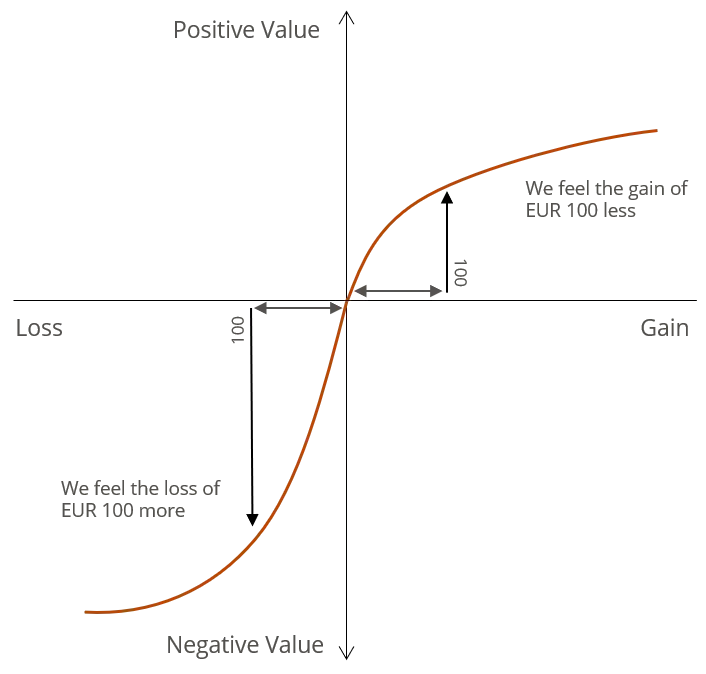
Prospect Theory by Daniel Kahneman
Young people tend to have an overwhelming amount of confidence. Use this to their advantage. When you are young, it is the time to try audacious things, support them, and don’t hold them back. Once they experience more of life, they will become more cognizant of their capabilities. This is all described by the Dunning-Kruger effect. Support them when they are at the peak of Mount Stupid. When they have a business idea, give them support, and I stress “support”, don’t do it for them, don’t be the knight in shining armour that saves them. Let them experience it for themselves just like you hopefully did.
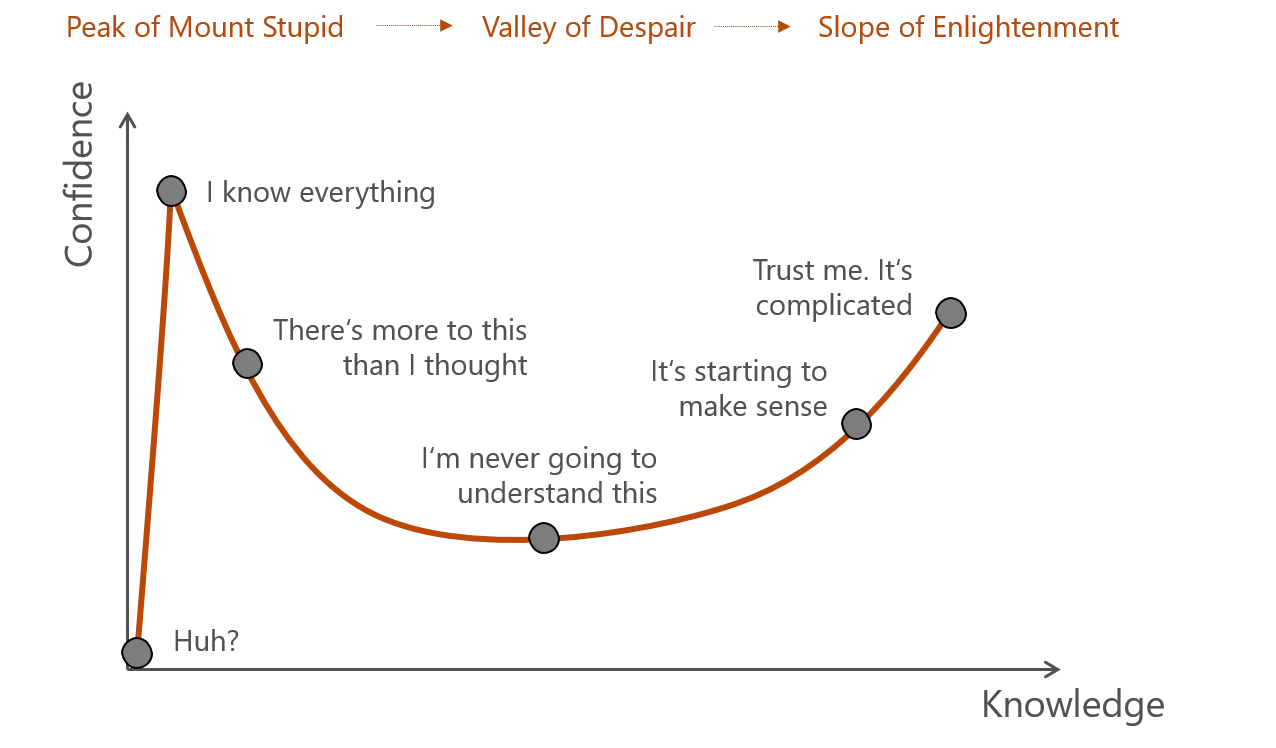
Dunngin Kruger Effect
Provide family members with ample opportunities for coaching, mentoring, therapy and any other professional support that they may need. Again, encourage and support them, but don’t solve their life for them. Something that I encourage families to do is to regularly do a hardship retreat together. My dad did this with me; we would go to a cabin in our forest. We would have to fish, hunt or gather our food. If we came back empty-handed, we had no food. I learnt to be hungry, and I learnt to deal with it. Find your own way of practising hardship as a family.
Ability to find meaningful work
There is a strong interlinkage to mental well-being, and what I mentioned above. How can the family support their family members to find meaningful work? What expectations do you set for your family members? Which opportunities do you have to offer within your own organisation? Which opportunities could you create within your own organisation? What do your family members have to add? Where are their strengths and weaknesses? What do they enjoy and can spend doing for hours? Who wants to work within your organisation? What are useful regulations and expectations to have of them to support them on their way?
Rule number one: do not impose any roles on young family members. They need to form their own identity and integrate the family legacy into this identity. They need to walk their own path within the land of the giants. They need to open their wings and take flight on their own for a time in their life. All this said, you should give them ample opportunity and make it obligatory for them to get to know your own organisation, if there is one. This can be the work in the family office or any of your businesses. This is best done through training programs and internships. It is also of high value for them to gain experience outside the family organisation. It is up to your own culture to decide if this is through internships or if you impose several years of work somewhere. I am a fan of flexibility here and of looking into creating opportunities for the family. This can be through a venture capital arm. This can be through philanthropic endeavours. This can be through a new business unit that integrates the skills and experience of a family member. The key here is that you view your family members as a resource. And that you view them as the future of the family. Not every family member will want to work in the family organisation. And not everyone will want to at every stage in their life, either.
Also, this does not apply just to rising and next gens. People of the now gen and the past gen will struggle with this also, and will also need support. Letting go of power is hard. And never having received the power that you might have wished for is equally as hard. This needs to be taken into account and managed appropriately, or this will create resentment and thus fragility in your family. Don’t let the family organisation and work within it be a disruptor.
What is Next?
We have now covered all 5 capitals through the lens of family and antifragility. The next time, we will look into how they are interrelated. Looking at each one on its own is a simplified view, which does not give credit to reality. How do they affect each other and how can disruption in one lead to disruption in all the others? Stay tuned :-)