How to Antifragile a Family's Human Capital - Part 1
Antifragile Succesors
Antifragility and Human Capital –Setting the Scene
As usual, it is worth revisiting quickly what exactly antifragility means. Antifragility means that hardship causes a system to improve — another step up from resilience, where a system withstands pressure.
Human Capital is all about the family’s physical and mental well-being and the family members’ ability to find meaningful work. The focus is on the humans in a family. The human body is a biological system, and thus it is by definition an antifragile system.
However, remember that antifragile systems still have a breaking point. This might seem like a paradox; however, nothing is inherently unbreakable. So even though we humans are antifragile by definition, we have a point where we break. Physically, this can be all sorts of things, from illness to accidents. However, with the right maintenance, we can change the breaking point. As a simple example, the fitter your body is, the better you can deal with lower or higher temperatures. Thus, your body’s capacity to withstand them improves.
The most fragile part of modern humans’ lives has become ourselves. With increasing living standards, easy access to food and healthcare, we have become weak. Many things that did not take extra effort in the past now do. Many of the things we now need to go out of our way to do, to be antifragile, used to be part of everyday life.
How to create Antifragile Family Members
Now that we have looked at the basics of antifragile human capital, we can go into what you can do to create it. For this, we can discern between things that each individual can do and things that a family can do. After all, each of us is responsible for their own health, once we have become adults. Before then, we were at the whim of our caretakers and parents. So, let us start with the individuals first.
Physical well-being
Essentially, moving enough, eating well and sleeping properly are the three core pillars here.
It is our personal choice whether we move enough or not. Some of us might struggle with it and will need help and encouragement from the family. More on this in the section on family. Keeping physically fit ultimately lies in one’s own responsibility. I will not get into biohacking and performance science. Most people have to nail down the basics first. Walking more, take the steps instead of the elevator, walk instead of taking public transport or a taxi. Plan in the extra time to move more. Humans are made to walk and sprint. Walk plenty and sprint once a week, and you will already do great. Get a personal trainer or a physiotherapist if you struggle to train. You can join a sports club. There are many sports out there. Do something that is fun.
Eating a healthy diet is another prerequisite. Yet, I want you to take “healthy diet” with a grain of salt. What is healthy changes constantly, one fad chases the next. I am not a proponent of any diet. Some diets have specific use cases for certain diseases, and that is all well. However, fresh whole foods are the way to go. Try to refrain from convenience food. Freshly cooked whole ingredients. This included cooking rather than going to restaurants constantly. Keep it easy on the booze and caffeine. Excess is never good.
Sleeping plenty. Yes, I know, if you sleep less, you have more time. Also, if you sleep less, the quality of your output goes to hell. I have tried; you don’t need to. For me, now sleep is always first. I cut out other things before I cut out sleep time. Find out what your chronotype is and get into a good getting up and going to sleep routine. The better your sleep quality, the better everything else, from physical health to mental health and your general performance.
Now, all the above is not meaningful unless we take our body to its limit. Not to the limit that breaks us, but we need to overdo it slightly. So, train a bit more than what is comfortable; this builds a stronger body. Fast regularly, and this will improve your digestive system. Occasionally, go with little sleep so your body learns to adapt. These things will all help you become antifragile.

Photo by Karsten Winegeart on Unsplash
Mental well-being
Do something for your mental well-being. There are many things one can do out there, and we are all different. Talk therapy is useful if you find a therapist who applies a method that works for you and who understands your situation. Get coaches to help you with your challenges, and mentors to guide you through life. Now, the most important part is to have a social circle. And one that you enjoy being in. Loneliness has a huge strain on a person. While family is incredibly important for mental wellbeing, it is paramount to have our own social circle. Especially from wealthy and powerful families, people will grow up isolated and end up socially lonely. Loneliness is the number one marker for a short life, for early dementia and many other diseases. An outside social circle is also important, just as professional support to discuss family issues. With a strong social group behind us, it is easier to bounce back and improve from hardship.
Again, similar to physical well-being, we want to grow up encountering hardships. harships that are just hard enough to make us sweat but not too hard for us to break. In this case mentally straining. Facing problems and solving them. Learning to make decisions ourselves in the face of trouble is paramount to mental fortitude. Building grit to walk through a proverbial hailstorm. Teach family members to have a growth mindset, which is the mental basis for the antifragile individual. This might all sound straightforward, however, in many families, there is a notion of protecting the next generation. Parents don’t want their children to suffer, yet it is the key ingredient for leading a good life. Whatever each of us defines as a good life. On the other hand, some families also tend to apply too much pressure on the next gen, which is just as bad.
Another key ingredient for an antifragile mental well-being is belief. It is less important what type of belief is applied. While we want to try and improve our decision-making and action-taking, it is not the sole factor of success. Luck is more important than we want to admit. Now, back to belief: believing in a higher power is often the only reason we do not despair. This randomness in life and how certain hardships come for no particular reason our way. It just is the way of life. I have encountered many next gens who abide by a sort of nihilistic way of life (which I used to adhere to, too), and it is not healthy.
Taking breaks is another crucial aspect. We want to endure hardship in an intermittent fashion. Taking breaks is part of training, and we want to train mentally just as we train physically. Recovery phases are important. When things get real, we need to have learnt to take mini breaks. Take 10minutes to breathe calmly. Do a few minutes of meditation when we can. If we are not used to doing it in the good times, we won’t think about it in the bad times.
As a final point, a strong body and a strong mind support each other. They are interconnected. Going through physical hardship builds not just a strong body but a strong mind and vice versa.

Photo by Dingzeyu Li on Unsplash
Ability to find meaningful work
When we grow up surrounded by wealth, we can easily struggle to find meaning in life. Other than sleeping, work is the thing we spend most of our time on. And according to Viktor Frankl, we can find meaning through love (caring for others), through a craft or hardship. Often, we can make our hardship into a craft as well, which, for example, is the case here. Through my own hardship, I have discovered a meaningful craft. Work can come in different forms; we can focus on care work as a parent, we can focus on philanthropic work, or we can do a craft that gives us meaning. Why is this part important? When you feel meaning in your work, you feel meaning in life. If we feel we have meaning in life, we have a much higher mental fortitude and can face challenges head-on. We can walk through fire and come out the other side like tempered steel. This is what antifragility is about.
Low-income and high-income families often have similar problems. On the one end, the lack of income and the dependency on social payments can lead to putting big pressure on the kids or the total lack thereof. On the other the end, the abundance of money and the stories of the successful ancestors can also lead to the same. In a society where our basic needs are ensured to us through unemployment payments and social security (particularly in Europe), meaning becomes more and more important. If you need to worry about tomorrow’s food, you will not think about your work being meaningful, afterall, the goal of working is simple: have enough to eat. So paradoxically, with increasing financial wealth, it becomes more difficult to find meaningful work.
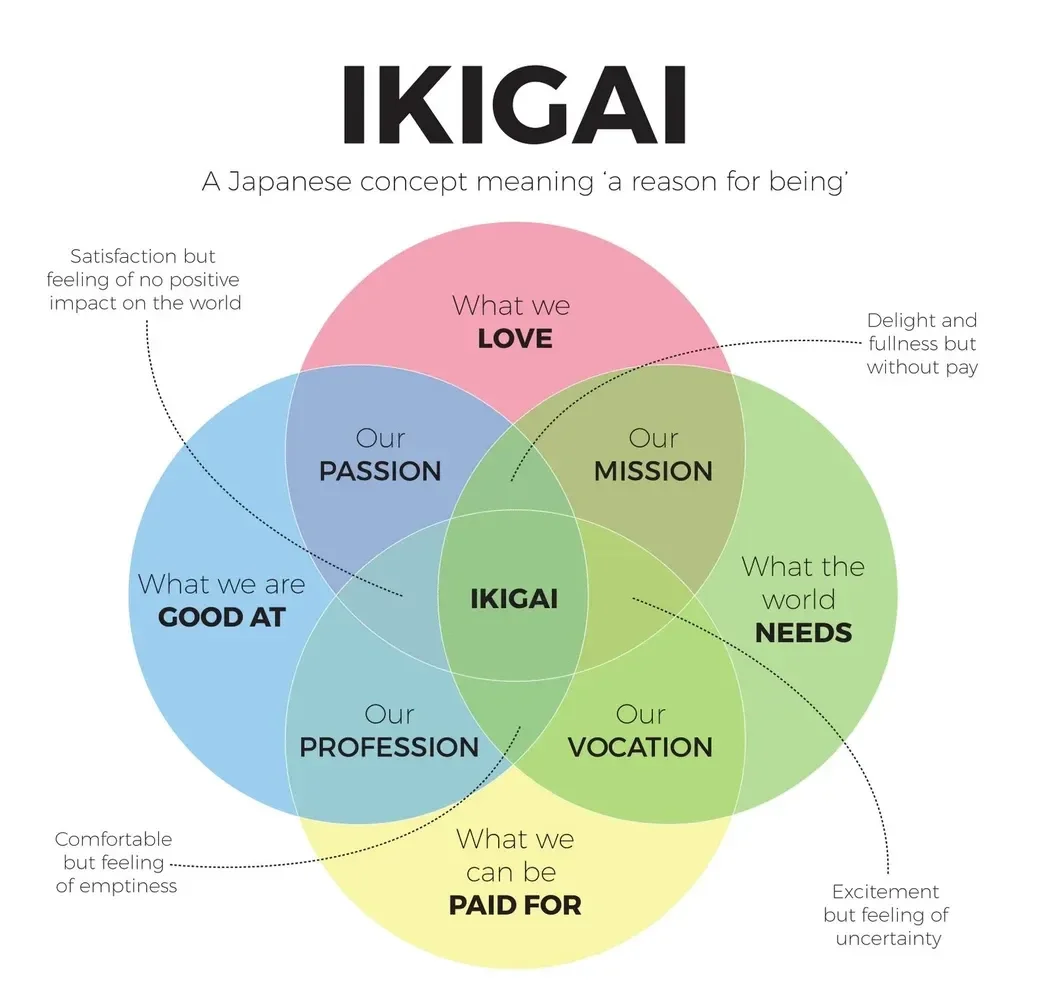
Essentially, it is crucial that we take a close look at our next generation as they grow up. Do not set a path for them; let them try out things. What do they have energy for? What do they enjoy? What are they naturally good at? It is delusional if you think that by the time someone is 18, they have any idea of what they want to do in life. There is a reason why many of us will study something to then end up working in a different field. The path is not the same for everyone. Ikigai is a good framework to follow. A meaningful job is something that we enjoy (passion), that we are good at, that people need and that we can get paid for.
What is Next?
The next article will take the learnings from this article and apply them to the whole family. As a little teaser: creating antifragile human capital is not just about strong individuals.