Competent Heirs Are Made, Not Born
Entitlement is not the problem. Fragility is.
An heir is neither born competent nor incompetent; they are made into either.
The Mindset of Antifragility
This mindset is the main reason why some families are wealthy over generations. Training and education of family members is paramount for antifragility. It is the foundation of intergenerational continuity. If you look at any family that passes four generations and beyond, you will find some sort of educational mindset. It will either be formal or informal. A classic example would be aristocratic families. Throughout the ages, we have been big on the correct upbringing. Each family has their own spin to it, but at the core, the strategy was the same.
I speak to founders and Gen 2 patriarchs all the time about this, and I hear a lot of the same concerns. They want their children to enjoy a normal childhood. They want to protect them from the stressors of wealth. But also, they want them to enjoy the perks of money. They don’t want them to go through a similar childhood to theirs, particularly when they have a background of no wealth. However, this approach is disastrous. First of all, you can never enjoy only the positives of something; it comes with both sides of the coin.
Secondly, not preparing your next gen for the wealth, even “protecting” them from it, is like throwing a glass block under a press. The moment pressure is applied, the glass block will break.
The Aristocratic Model
In my family, the tradition used to be: the first son is trained to manage the estates and political functions, the second son is trained to enter the military, and the third son is trained to enter the clergy. Women used to be prepared to be married away, which is an archaic practice and has no place in our modern world. Also, family members rarely had a choice in their destiny, which again is an archaic practice. However, at the core, this practice has a lot of merit. And any time in history that we did not follow this practice, there was trouble. The most recent example is my grandmother’s generation. My great-grandfather did not have any male heirs. Yet, his four daughters were not trained for the wealth that awaited them. It was assumed that the husbands would bring these skills. It was World War 2, and all of the daughters married Wehrmacht officers, good soldiers (and one actor), yet none had the upbringing to manage estates. This not only made management of the estates tricky, it also gave our tradition of training a break into the next generation. My father tried very hard to reestablish this in my generation, with some success.
“Aristocracy’s only an admission that certain traits which we call fine - courage and honor and beauty and all that sort of thing - can best be developed in a favorable environment, where you don’t have the warpings of ignorance and necessity.”
– F. Scott Fitzgerald, The Beautiful and Damned
When to start preparing heirs
Now, when would you think the right age to start this education would be? Before you read on, I want you to note down the age that you have in mind.
I hope you did not cheat yourself here, but education starts immediately after birth.
It starts first and foremost with you being the role model. If you want a child to behave in a certain way, you teach them by being a living example. You will have no success if you try to tell them A, yet you behave like B. Your kids will copy you, for better and for worse. From there, as a foundation, you can start being intentional about the lessons you want them to learn. You are the primary curriculum. We best learn through praxis and responsibility. The experiences and responsibilities need to be age-appropriate. If you ask a toddler to manage a stock portfolio, we can imagine how that will go. One corner piece here is that the kids learn to face the consequences of their decisions and actions. Of course, we do not want them to be dragged into the abyss, so it is about exposing them to decisions with consequences that hurt, but without shattering their confidence.

Photo by Stephen Andrews on Unsplash
What heirs need to learn
“All that I am, or hope to be, I owe to my mother.” – Abraham Lincoln
Before we get into more on how to make competent heirs, we should look at what a competent heir is. What should you teach your rising generation? Of course, this comes with the caveat that every family is different. Their histories, their culture, their asset composition, their family composition and their experiences all differ. However, there are overarching themes and topics. Just think about yourself and your career: What are the things that you did not learn during formal education? What were you taught by your family? What did no one teach you? What are the hard lessons you had to learn? Essentially, we want to cover all the bases as described here.
The following list is not exhaustive, and the categories are a question of semantics. But they are a good starting point for you to think about your internal family academy curriculum.
Entrepreneurship
Leadership
Family History
Family Culture & Values
Negotiating
Problem Solving
Specific Industry Knowledge
Financial Literacy
Social Skills (networking, power dynamics, etiquette, etc.)
Health
Intentionality vs Outsourcing
Now, some of the above you can outsource to professionals, but some you need to take care of yourself. And this is the hard part for some: being a parent is difficult. It requires your time and effort to be successful, just as in business. I have seen many great business people who fail as parents. And then many great parents fail in business. Parenting and educating the next generation require intentionality, and a plan is essential. Because there are no second chances. A huge risk in a family is to have a Parent and a child run a business together, yet they are strangers to each other. It is a tough pill to swallow once you realise that you trust your friends more than your own parents or children. This damage is very hard to repair and requires much more resources than making an effort from the get-go. And it is the parents’ responsibility. Many patriarchs/matriarchs are obsessed with their legacy. Your children are part of that. Your children are the ones to carry it forward, protect it, and build upon it. They are your future. Many skills needed to be successful in life are not taught in school. Even some expensive tutors will not be able to teach them. They need to be enabled by the parent to have the experiences that will prepare them.
Tipp: Get the grandparents involved. Kids love stories from their grandparents, and nothing teaches better than a good old story. And as a bonus, it gives the past generation purpose and keeps them involved in the family meaningfully.
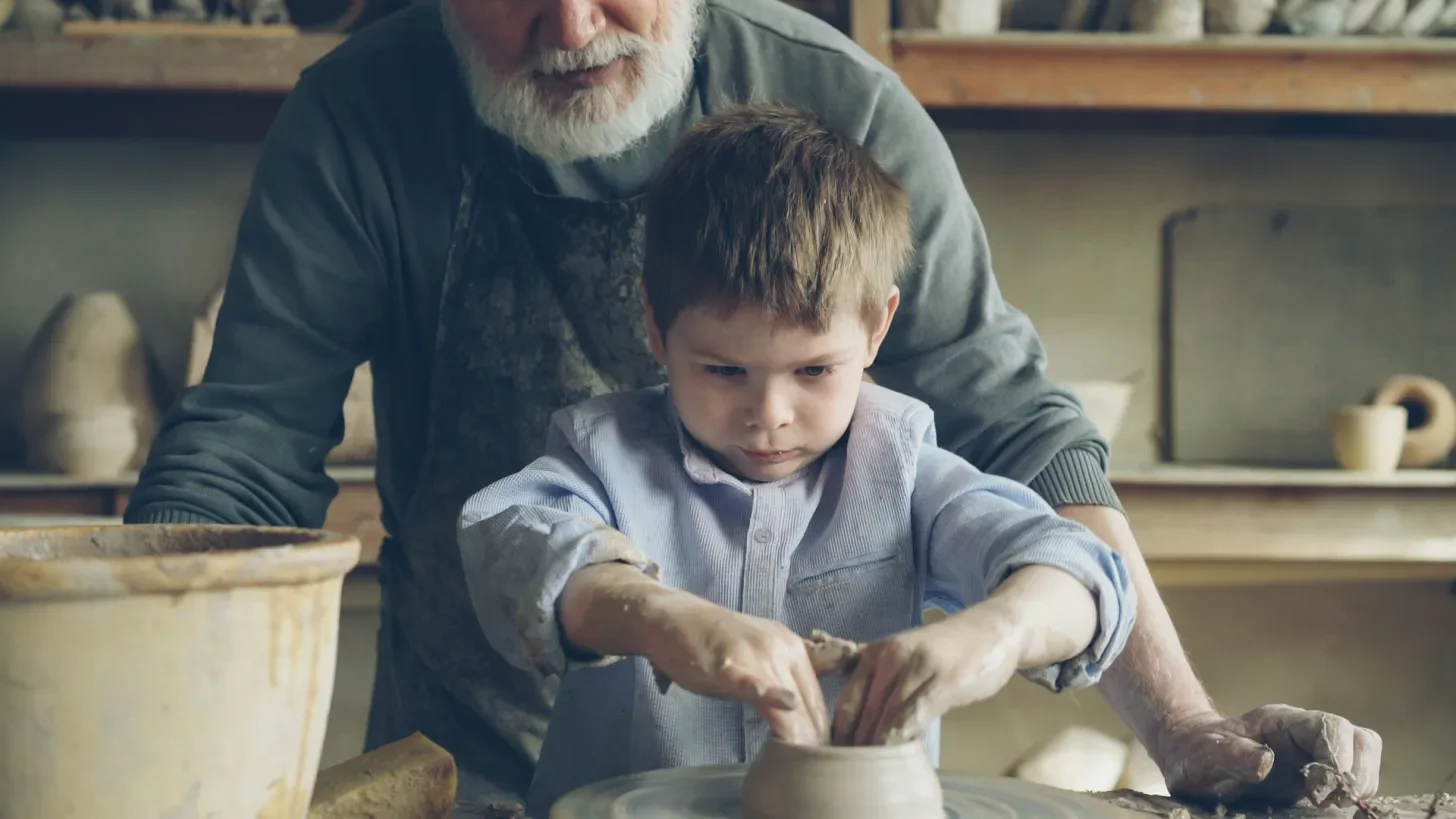
Photo by Vitaly Gariev on Unsplash
Nepotism vs Obligation
A classic fear of many parents is that their next generation is entitled. Out of this fear, many things are done, which tend to exacerbate the issue. Instead of looking at your next generation with optimism, you are looking at them through a lens of pessimism. As mentioned above, the next generation carries the family’s legacy forward. Now, what is the difference between entitlement (nepotism) and a sense of obligation? Many successful heirs work very hard and are intentional about what they do and how they behave. The reason for this is that there is a sense of obligation to carry the family forward. A responsibility to do a good job. Yet, for this to develop, they need to be given a chance —invited to step up, not forced into it.
While an external employee might be more skilled than your own family members, the family has skin in the game. Skin in the game is more important than skills. Skills can be learned. If you do a good job at educating your heirs, they will acquire the skills and the mindset to be competent. Part of this is a gradual handover of responsibility. Let them take charge. Let them fail. Let them develop this sense of obligation. This is one of the key differences from the aristocratic lens of educating the next generation. We trust our own the most, and we trust in their ability to become the best. Through a sense of responsibility, people can develop purpose.
“Life ultimately means taking the responsibility to find the right answer to its problems and to fulfill the tasks which it constantly sets for each individual.”
– Viktor E. Frankl
What is Next?
In the next article, we shall explore the detailed curriculum of an heir academy. Why is each topic crucial? And what is your role as a family in each?
Stay tuned, and in the meantime, please share and subscribe to my publication!