The psychology of competent heirs
A look under the hood of an heir
The Burden of being an Heir
Father was the eldest son and the heir apparent, and he set the standard for being a Rockefeller very high, so every achievement was taken for granted and perfection was the norm. — David Rockefeller
The above quote describes the pressure that heirs are under from a young age. Your Ancestors have done incredible things. This raises the bar for you to a nearly unattainable standard. This can be a crushing weight upon your shoulders. Often in multigenerational families, the “norm” is set at a level that would be highly successful for anyone else, especially in the area of expertise of a family. But not exclusively. Often, just the stories of your ancestors’ successes are enough to create this pressure. And hearing from a young age that you are to follow in their footsteps. These expectations are often not explicitly put upon the heirs; however, the effects are just as strong.
“When people can't find a deep sense of meaning, they distract themselves with pleasure.” — Viktor Frankl.
On the other hand, some families take the approach of taking care of their heirs and setting up structures, so that the heirs do not have to bear the weight of the legacy. The effect of this is best described by the Quote from Viktor Frankl. Those who have no sense of meaning will distract themselves with pleasure. This is how the trust baby is born and never grows up. Pleasure will never fill what Viktor Frankl calls the existential vacuum that they endure. But they will continue to try to fill it with more and more pleasure. It continues until they destroy themselves through overdose or other accidents, planned and unplanned.
I have experienced both sides of the coin, so to speak. The stories of my ancestors and the implicitly stated expectations weighed upon me. However, there was a period when my parents did not care about my performance at school or university. In this period (age 16 to about 24), I was swimming in such an existential vacuum. And again briefly in 2018, after we sold our company, which I had sworn to rescue from a sale. An honourable goal, yet hardly attainable at the time.
The effect here is best described using the stress-performance curve. A well-known relationship from high-performance science. People’s performance will suffer greatly if they are under- or over-pressured. High pressure creates the Crisis of Legitimacy; low pressure creates Learned Helplessness.
Applying too much pressure is known as the Affluenza effect, which often comes with a Crisis of Legitimacy. Imposter syndrome means that we are scared of being called a fraud. A crisis of Legitimacy goes a step further; we know that we do not deserve this. The pressure of all of this can be crushing.
Applying too little pressure results in Learned Helplessness, as coined by Seligman, and is often exacerbated by Snowplow Parenting, which is a level up of helicopter parenting. Snowplow parenting often takes place in wealthy households, where any potential problem is plowed out of the heirs’ way, resulting in a total loss of agency.
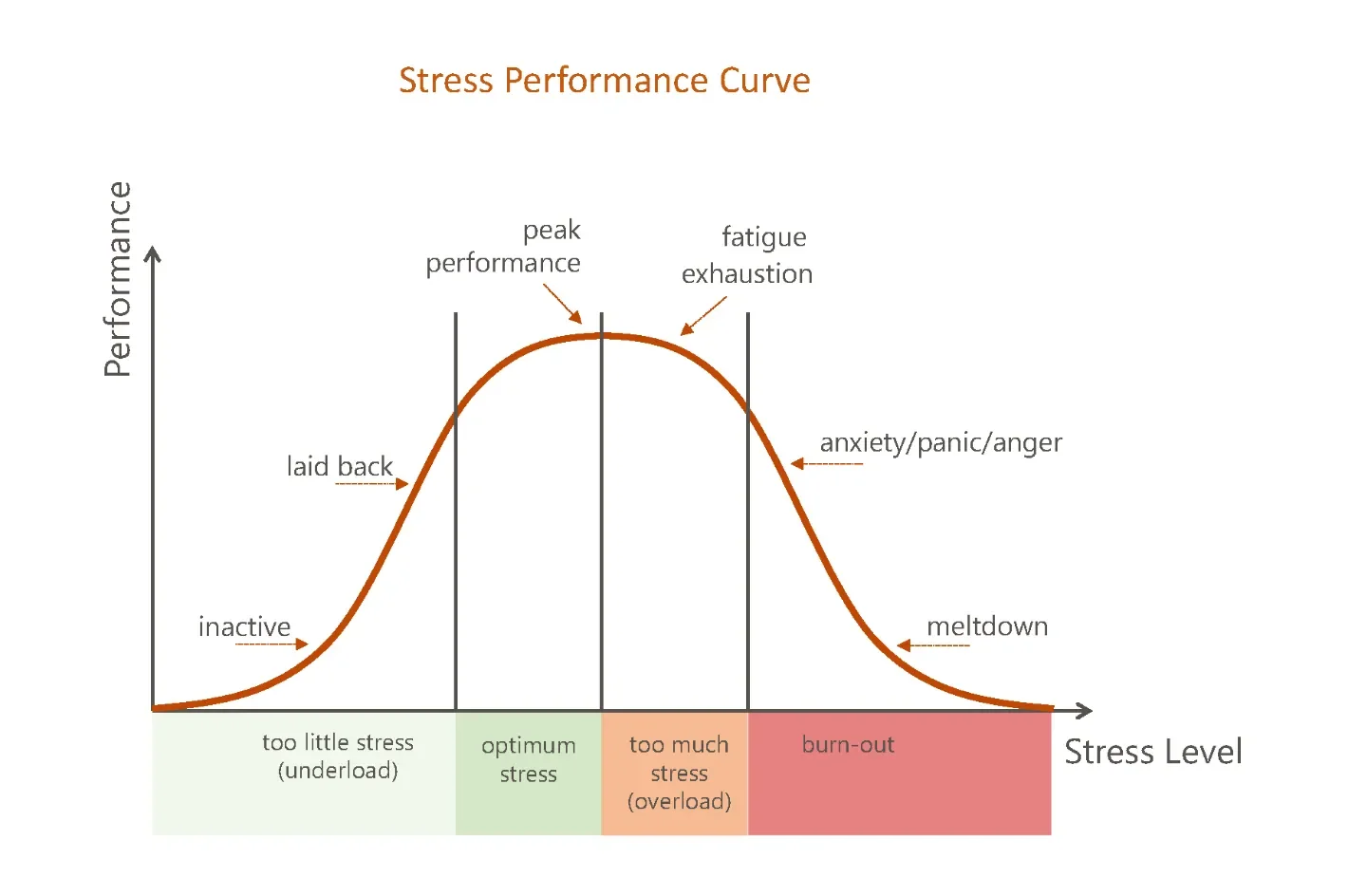
So if you want to create miserable heirs and thus incompetent ones, you will either pressure them or not at all. Now, you can have a miserable but highly competent heir by pressuring them. However, they will eventually break, creating a catastrophe for themselves and their family.
The Heirs Identity
“Life isn’t about finding yourself. Life is about creating yourself.” — George Bernard Shaw
Every person has an identity. Your identity describes who you are. So what describes you? To make this easy, let’s list some things that typically define our identity:
Our physiology: our genetics and physical characteristics.
Our values, beliefs, and goals: how we behave and make decisions.
Our history: what we experience in life, the good, the bad, and the ugly. And what we remember.
Our ethnicity: where we are from and what we experience in society.
The culture we grow up in and how it has formed us.
How our parents have brought us up.
The roles we currently have: patriarch, father, heir, son, ceo, husband, matriarch, wife, daughter etc.
What we own and our relationship with it.
How we derive meaning in life and our vocation.
Looking at the list above, we can quickly discern that our identity is not a fixed entity, but evolves with time. Our identity is ever fluid. This is important to understand, particularly when it comes to understanding heirs and their development. Even with a less-than-ideal start, an heir can still form their identity. However, this is an intentional process. Even more important is that the influence of the parents and the whole family is huge in identity formation.
“I am not what happened to me, I am what I choose to become.” — Carl Jung
As both the quotes by Carl Jung and George Bernard Shaw show, it is up to each of us to decide who we want to be. So it is paramount that family members, heirs in particular, are given the power to develop themselves. Not only the power, but also the necessary trust is put in them. I have stressed often before that trust and autonomy are essential in heirs. I hope that after looking into what forms a person’s identity, the reasons are clear now.
Another key topic is that a good portion of the points of an identity can be summed up as the family’s legacy. Heirs must learn to integrate the family’s legacy into their own identity. It has taken me a long while to do so. It is enormously toxic to the self if you do not accept the family legacy. It is an integral part of the self, and any heir that tries to extract themselves from the family legacy will struggle.

Photo by Laura Fuhrman on Unsplash
Finding Meaning as an Heir
"Those who have a 'why' to live, can bear with almost any 'how'." - Nietzsche
The quote by Nietzsche sums up the importance of finding your why. Now, many heirs struggle in this regard for one of three reasons. Either they struggle to find a why for themselves, due to the huge amount of wealth. Or they struggle because of the feeling that they need to climb a sheer cliff in the form of their ancestors’ achievements. And thirdly, a meaning is forced onto them by being designated as the successor. If an heir falls in any of the three cases, we have a fragile person at hand. If you do not have a meaning to cling to in hard times, you shatter.
People with no meaning live in an existential vacuum. This is an empty space that they will try to fill with replacements of meaning. This may take the form of addiction to alcohol, drugs, pleasure, adventure, etc. Or it may exhibit itself through overachieving in sports, work, or anything really. Both extremes are not healthy, and both lead to a person who is an empty shell. Many families do not realise how important it is to support their heirs in this.
“What man actually needs is not a tensionless state but rather the striving and struggling for a worthwhile goal, a freely chosen task.” - Viktor E. Frankl
My favourite approach to finding meaning is by Viktor Frankl. Frankl suggests that we can find meaning in one of three areas of life: a craft, love, or suffering. Some people may find a craft that gives them joy and a sense of belonging. Others might find their meaning in love for another, this can be as a parent, partner, or caregiver. And the hardest part is to find your meaning through suffering. This can be through tough experiences, such as crises or illnesses, or the struggle of being an heir.
An Heir’s Psychological Baggage
Being an heir comes with some psychological baggage. Competent heirs not only have honed their skills, but also navigated this baggage successfully. Growing up in a wealthy household is not for the faint-hearted. The psychological effects are often underestimated. Most heirs struggle with some sort of abandonment trauma. When we hear trauma, we immediately think of big traumatic events. However, a multitude of small events and systemic abandonment will have equal effects. Imagine it more like trauma adding up; many small events can add up to the same amount as a big one. In a child’s early years, the time they spend with their parents is crucial. With wealth comes responsibility, both financial and social, which leads to a lack of presence by the parents. Children are inherently egocentric beings and thus reflect this lack of presence upon themselves, believing something is wrong with them. This can lead to a lack of motivation, to overachieving, intense people pleasing or a propensity for making trouble. None of which are healthy outcomes. All of these are issues an heir has to face.
The topic of inherited trauma (also known as second-degree trauma) is also getting more attention. We learn by copying our parents (or other caretakers), who have done so growing up, too. Thus, dysfunctional behaviour is picked up and carried through the generations. Successful heirs need to break these cycles. The work is grueling and intense. Many failures and catastrophic decisions come from these subconscious patterns. Cleaning house psychologically is the only way to mitigate the risk associated with trauma. Research even goes further and has shown that trauma is not only inherited through the copying mechanism, but also genetically. Epigenetics is fascinating and still early; however, several studies have shown that trauma can trigger genes, on or off. Usually, the effects are detrimental. The good news, however, is that these genetic effects can be reversed.

Photo by Luke Pennystan on Unsplash
A Competent Heir’s Mindset
An heir’s mindset is the centerpiece of navigating all of the aforementioned. So, what makes a good mindset? An heir needs to be curious, gritty, and growth-oriented. The same principles that we can observe in professional sports and special forces apply to heirs. This may sound dramatic; however, it simply is not. The pressure an heir has to face is different, yet equally intense. We grow up knowing that our decisions affect people. The people who work for the family, the people that the family supports, and the family members themselves. Not every heir wants to take on this responsibility, and that is fine. Yet, those who do need the right mindset.
They need to believe in effort and growth, not talent. Carol Dweck and her research show this well. Part of growing is to have grit. Grit is what makes us push through challenges and come out the other side. No antifragility without it. The work by Angela Duckworth is noteworthy here. Being curious and open-minded is what will lead to finding solutions. Solutions for the problems we encounter in the family, the family’s assets, and network. Without curiosity, a leader cannot navigate changing times, and the rate of change in our modern world is ever faster.
Curiosity and grit are not just traits; they are the immune system of the dynasty.
What is Next?
Next, we will look into Neurodivergent Heirs. How is their experience different? Why are they more common than we think?
Stay tuned, and in the meantime, please share and subscribe to my publication!