Signs of a Fragile Family Balance Sheet
Part 1 of 4: Spotting the Fragile Family — concentration, debt, and the assets we couldn't let go of.
I still remember when my brother discovered the liabilities on our land in the land registry in 2010. When he brought it to my attention, I did not understand the ramifications of these liabilities. When he confronted our father with it, our father promised us it would be fine, and I believed him. This discovery stopped our succession discussion in its tracks. My brother did not relent, calling out the financial risk we faced from this. I was only 21 years old with no formal financial training. It hit home in 2014, when Teak Holz International's (THI) new CEO uncovered inconsistencies in the company's own valuations. That was the moment our balance sheet's fragility stopped being theoretical. This discovery then led to THI filing for bankruptcy in 2015. By then, even I understood how dire the situation was for us.
This is part 1 in a four-part series exploring how you can spot fragility in a family — even your own. By the end, you'll be able to spot it early enough to correct course. Correct course, so that you don't have to live through what we did. It was destructive, painful, yet avoidable.
Capital Concentration
One of the most common fragility flags in families is that they are overly focused on financial capital. Thus, in terms of the 5 family capital framework, you are overweight on the financial capital. In simple terms: money is their focus, and they ignore everything else. As a reminder, other than financial capital, there are the cultural, intellectual, social, and human capitals. All of them equally important in their own right. The families that endure over centuries pay attention to all five capitals.
The power of all five capitals interlocking is shown well by two studies. One by Gregory Clark, where he analyzed English surnames and referenced them back to the surnames of the Norman conquerors. He looked at Oxbridge admission statistics and found that people with the same surnames had a 16 times higher admission rate in 1170, then a 4 times higher admission rate 300 years later, and now have a 1.75 times higher admission rate — 9 centuries later. The second study is by Barone and Mocetti, comparing individual-level tax records for everyone living in Florence in 1427 to their likely descendants living in Florence in 2011. In short, their study shows that the same families that practiced elite professions in 1427 were still practicing elite professions in 2011.
To illustrate the negative power of capital concentration, we can look at the Vanderbilt family. Cornelius Vanderbilt was the richest man in America until he died in 1877. His own family reportedly controlled roughly a ninth of all currency in circulation in America at his peak. At the family reunion in 1973, not a single one of the 120 participants was a millionaire. Let that sink in: within 3 generations most of the wealth was gone. The reason for this was a lack of building the other four capitals. The heirs lacked intellectual capital — the education and business acumen to grow what they'd inherited. They lacked cultural capital — the values and restraint that might have tempered the spending. They lacked human capital — the psychological discipline to carry wealth without being consumed by it. And they lacked genuine social capital: they spent fortunes trying to buy their way into old-money society, yet the very people they were courting still discounted them.
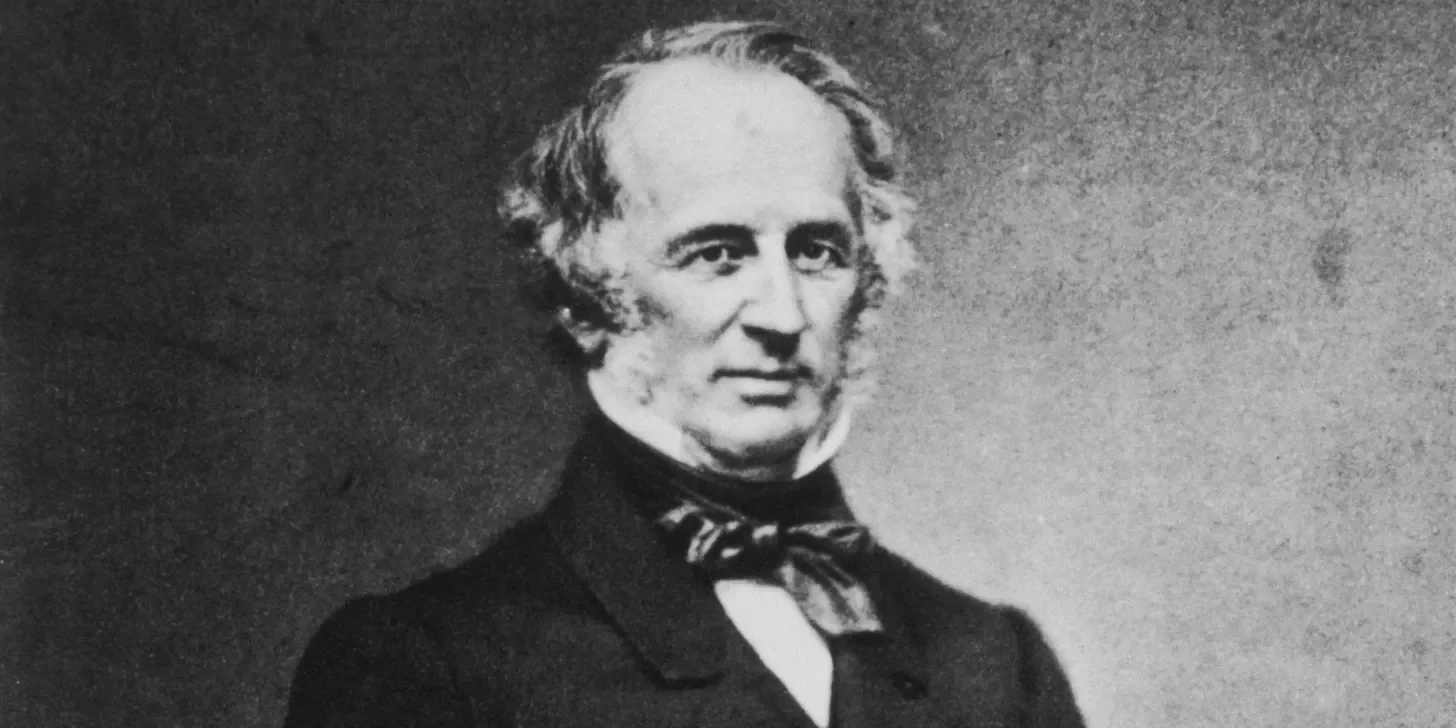
Cornelius Vanderbilt
My own family's collapse doesn't fit this pattern precisely. We spent centuries building all five capitals, and the family endured for a thousand years. The break came when there was no male heir in my grandmother's generation, and the family did not adapt to it. That gap was compounded by ten years under Soviet occupation, from 1945 to 1955, when the family was scattered, cut off from the estate, and lost the motivation to train the next generation. What eroded in that decade was intellectual, human, and internal social capital — not all five capitals, but enough. Coupled with the concentration and leverage this piece has already named, that deficit is what turned a bad bet into a collapse.
Asset Concentration
A fragility metric easily discerned on a family’s balance sheet is asset concentration. Often, families have most of their financial capital tied up in one asset or asset class. Typically, this would be the family business. Or real estate, another common concentrated asset class. More recently, many families have overallocated into private equity, causing severe liquidity crises of their own.
In our case, our wealth was concentrated into our forest land, which accounted for more than 90% of our net worth — a stable asset class, yet exposed to climatic conditions, highly illiquid, and with a low yield. Most of our sweat and liquidity went into repairing the damage the Soviet occupation did to the estate. The mechanism behind this is important, and more on it under sacred assets. However, since my father took over, he had ample opportunity to diversify into other asset classes — more importantly, assets with more liquidity. Even real estate had a much higher yield at the time and was dead cheap for most of the 80s and 90s. Diversifying into bonds and stocks would have given us real financial stability. Instead, we would even hold back on harvesting trees when we did not need the cash. While this seems financially savvy, years later it turned into a disaster. Trees can get too old, and the timber quality deteriorates, which is why you shouldn’t hold onto them. Some will even rot from the inside out. Thus, sell them when they are mature.
So what is the mechanism behind asset concentration? Why is it a fragility flag? As La Porta, Lopez-de-Silanes, and Shleifer's study shows, wealth concentrated in a single firm drives family controllers toward greater risk aversion, which in turn produces both lower business risk and lower returns. Lower returns over generations will compound into a downfall in net worth. Not only that, but family firms are less willing to take on debt precisely because of the lack of diversification in family wealth. While debt is not inherently good, the fear of utilizing it is neither. Sometimes outside financing is the right way forward.
The most obvious failure mechanism behind concentration is that if that asset gets into trouble, you have no other options. In our case, had we diversified out, we could have easily compensated the failed investment. I even argue that with diversification, that investment would not have been made in the first place. Diversification lowers risk. The longer a family doubles down on concentration, the riskier the bets become for further growth. The falling returns discussed earlier lead into a dead end, and the only way out will be highly risky.
I often hear that concentrated bets outperform diversification. This may be true in a small number of cases, and often that is the origin of a family’s financial wealth. A founder who took enormous risk and bet it all on one venture. However, this is hard to replicate, and once considerable financial wealth is there, it is not the ideal way to position the wealth. Heirs doing their own ventures with family backing is a different story; the management of the family financial resources needs diversification. Hendrik Bessembinder examined the lifetime returns of every U.S. common stock traded since 1926 — roughly 26,000 companies over 90 years. Only 42.6% of all stocks in the sample generated a lifetime return greater than a one-month Treasury bill. That means a majority of publicly traded companies — 57.4% — destroyed shareholder wealth relative to the safest possible alternative over their entire existence as a public company. The best-performing four percent of all listed companies account for the entire net gain of the U.S. stock market since 1926.
Illiquidity and cash flow
The next fragility flag on a family’s balance sheet is illiquidity. We can distinguish between illiquid and liquid assets. And a healthy balance sheet has a good proportion of both. Yet, most families lean towards the illiquid side. This is due to how most families create their wealth — with a business. Families whose wealth originated with a hedge fund manager or a banker are often the exception — sometimes so liquidity-obsessed that it becomes its own weakness. Still, most families that come into financial problems will become liquidity constrained. Often, it is due to poor preparation and poor asset allocation. If your family portfolio is not able to endure mistakes, it is highly fragile. Financial mistakes and black swans happen and need to be planned for.
In our case, the lack of liquidity was what turned a bad bet into a disaster. Not only were the assets we had mostly illiquid, but we also lacked cash flow, i.e., yield. When debt needs servicing, when a restructuring has to be negotiated, when advisors need to be paid — liquidity and cash flow are king.
Essentially, illiquidity robs you of flexibility when things go wrong. Also, you are not able to pounce on opportunities with a lack of liquidity. Now, you can create liquidity from illiquid assets by pawning them (jewelry) or by getting lombard loans on them (for example, gold and silver). Basically creating an emergency credit line. This would be a plus point on a family balance sheet: the existence of an emergency credit line. In our case, we only had our art and antiques collection and some foreign real estate left. Relative to our debt level, way too little. Which leads me to the next point.
Liabilities
A classic and simple exercise: listing liabilities against assets. As simple and important as this is, many families will not do the exercise. While most families will fear debt, liabilities can come in many shapes and forms. Often in the form of contractual penalties or standing obligations. These liabilities are often not even seen on a formal balance sheet. Combined with asset concentration and illiquidity, this is the perfect storm. Even with a low loan-to-asset value ratio, concentration can break your neck. If your main asset drops by 50-70% in value, a margin call can be triggered, and what then? A fire sale is what happens then. This will lead to an even further deterioration of wealth. The dynamics behind this are well described by Shleifer and Vishny in their article in the Journal of Economic Perspectives.
Leverage or liabilities are especially problematic if they are onboarded for the wrong reasons. Often they make their way onto the balance sheet to continue something that should be discontinued: a standard of living, a non-functional asset, a toxic family culture. When debt exists to prop up one of these, that's an added fragility flag. It points to much deeper problems than financial mismanagement.
Shleifer and Vishny make this connection explicit in their earlier paper, 'Liquidation Values and Debt Capacity,' published in the Journal of Finance. The more liquid the asset, the more debt it can support.
Sacred Assets
Sacred assets are a huge liability to the family wealth. Thus, another fragility flag. These are assets that are viewed as untouchable by the family. Not merely a legacy asset. This is another step up. It is unthinkable to even consider changing anything about them. Changing how they are managed, changing how they are structured, changing what they look like, and unthinkable to sell. This can be anything: a business, real estate, a stock, a partnership, a yacht, or any other emotionally connected asset. In our case, the palace was such an example. We poured huge amounts of money into it after WW2 to repair the damage from the Soviet occupation. Economically, this was idiotic. We rarely had liquid resources to take on opportunities. There was always money, somehow, to repair and restore something else in the palace.
Even I held onto this belief, initially. Psychologist Philip Tetlock has a name for this: a sacred value. It is something placed beyond calculation, where even raising the question of trade-off feels like betrayal. Nearly no one in my family ever sat down and weighed the palace against the opportunity cost of leaving it untouched. Selling it was not considered, because thinking it already felt disloyal. Those in the family who tried to raise the option of selling, were ridiculed. It took me years to understand how this was a problem. In hindsight, we should have initially focused our resources on economic activities. Compounding that over decades would have given us resources to easily restore the palace, if we still wanted.
This is what Gómez-Mejía and colleagues call socioemotional wealth — family firms will knowingly accept worse financial outcomes to protect the non-financial, affective value attached to control and identity. The palace was ours.
The mechanism behind sacred assets is that families will go to any length to uphold them. This is a massive risk factor. It may not be the trigger for the downfall; however, it may well be the cause of the setup.

Schloss Ruegers
Final Words
Spotting fragility in a family is the first step toward building something that can survive it. Left unaddressed, concentration, illiquidity, leverage, and sacred assets don't stay separate problems — they compound, the way ours did. Making the changes won't be easy. But you can't fix what you can't see, and now you know where to look. The consequence of doing nothing is pain that could have been avoided entirely. Don't be like us.
References
Barone, G., & Mocetti, S. (2021). Intergenerational Mobility in the Very Long Run: Florence 1427–2011. The Review of Economic Studies, 88(4), 1863–1891.
Bessembinder, H. (2018). Do Stocks Outperform Treasury Bills? Journal of Financial Economics, 129(3), 440–457.
Clark, G., & Cummins, N. (2014). Surnames and Social Mobility in England, 1170–2012. Human Nature, 25(4), 517–537.
Gómez-Mejía, L. R., Haynes, K. T., Núñez-Nickel, M., Jacobson, K. J. L., & Moyano-Fuentes, H. (2007). Socioemotional Wealth and Business Risk in Family-Controlled Firms: Evidence from Spanish Olive Oil Mills. Administrative Science Quarterly, 52(1), 106–137.
La Porta, R., Lopez-de-Silanes, F., & Shleifer, A. (1999). Corporate Ownership Around the World. The Journal of Finance, 54(2), 471–517.
Shleifer, A., & Vishny, R. W. (1992). Liquidation Values and Debt Capacity: A Market Equilibrium Approach. The Journal of Finance, 47(4), 1343–1366.
Shleifer, A., & Vishny, R. W. (2011). Fire Sales in Finance and Macroeconomics. Journal of Economic Perspectives, 25(1), 29–48.
Tetlock, P. E. (2003). Thinking the Unthinkable: Sacred Values and Taboo Cognitions. Trends in Cognitive Sciences, 7(7), 320–324.
Tetlock, P. E., Kristel, O. V., Elson, S. B., Green, M. C., & Lerner, J. S. (2000). The Psychology of the Unthinkable: Taboo Trade-offs, Forbidden Base Rates, and Heretical Counterfactuals. Journal of Personality and Social Psychology, 78(5), 853–870.