Beautiful Burdens - Inherited and Ignored
What legacy assets cost your family — and how to make them work.
I still remember the day I walked into my dad’s office. He stood at the window, looking at our palace, holding a cup of tea. He was stirring the tea with a spoon in slow swirls. The atmosphere was somewhat eerie. Suddenly, he started cussing. I did not understand what was happening. Then he said, “This damned building. I should just burn it down.” I was only six years old at the time. In the years before, the family had poured money into the palace for a national exhibition. The whole project was a financial disaster. A typical consequence of treating a legacy asset like a normal asset.

TM Bild
What is a legacy asset?
The term “legacy asset” is widely used in different industries. In financial terms, a legacy asset is an obsolete asset that has been kept on a firm's books for an extended period of time, has little value, and has the potential to become a liability (Investopedia). This view of legacy assets is one-dimensional, as it only covers their financial value.
Applying the family lens to it, a legacy asset is any inherited asset that is still held onto for other reasons, such as sentimental value, historical importance, or other reasons. Usually, the older a family gets, the more legacy assets it will accumulate. Each generation tends to add legacy assets to the family balance sheet without subtracting any prior ones. Legacy assets may be real estate, art, antiques, cars, boats, but also trusts or companies.
Legacy assets have defined my family's financial and emotional landscape for as long as I can remember. The most predominant in my life at the moment is Hardegg Castle. From a financial standpoint, it makes no sense whatsoever for me to retain the castle. Even in a top-notch location, these buildings are hard to maintain, let alone make money with. Legacy assets can quickly become a liability by eating up resources, not just financial but also time and energy. If you are not careful, legacy assets take your focus and become the center of your life. My parents fell into this trap. I see many peers do the same. And every family at some point faces the question whether holding on any longer is worth it. At some point, it is simply time to let go.
What do legacy assets mean for families?
Legacy assets are there for specific reasons that go deeper than financial gains. Usually, there is an important meaning behind their existence. Some of these might have started simply as a luxury asset, like a palace. Others might have been the birthplace of the family’s wealth, like their first-ever factory. A classic one is the family home, where generations have grown up. Each legacy asset has a meaningful story behind it. The stories are the main reason that the family continues to own them. These could be the stories of a grander time. The stories of survival. The stories of a new beginning. Stories are powerful, for better and for worse.
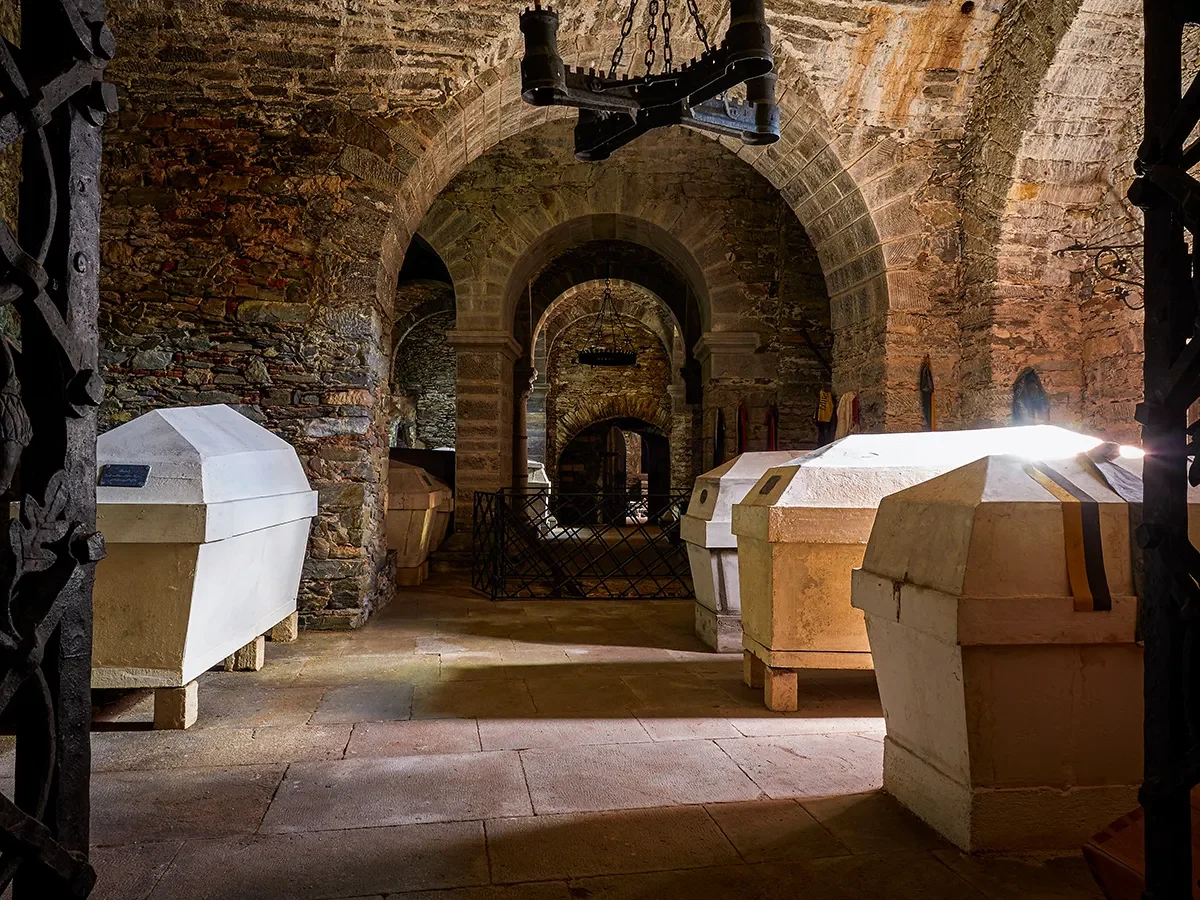
In 2017, I took over a bunch of legacy assets. Palace Ruegers and Castle Hardegg being the big ones. Also, in 2017 we sold our forest, which itself could be called a legacy asset. Forestry in many families is an obligation more than a financially lucrative endeavor. Most forestry operations in Austria have a yield of 1,5-2%. This is not terribly appealing. Financially, selling our forest was a sound decision, yet I regret it. I miss our forest. I spent most of my childhood roaming the forest. I remember time spent there with my father and my brother. It was my refuge. As it was my father’s. Our palace was a memory of grander times. Our family bought it in 1730 and then refurbished it at the peak of our power, wealth, and influence. It was riddled with stories of strength, strategic shrewdness, and valour. I hold onto our Castle mainly because we have our family crypt in it. Generations of our family are buried there, and thus it is important. The family of a friend of mine struggles with their legacy asset, which is the family’s old wheat mill. It was Habsburg Austria’s largest mill. The family could sell it; people are interested, yet they hold onto it. It keeps the family together. It is a place everyone returns to regularly for family events. Thus, it has importance.
Think about the different types of family capital: cultural, financial, intellectual, social, and human. Measured purely against financial capital, legacy assets rarely justify themselves. But financial capital is only one of five. Legacy assets can be valuable in the other four types of capital. First, the social capital. Owning a castle or a palace not only gives you social prestige by owning it, but you can also host great events at them. Ideally, events that are talked about years later. Or you can leverage legacy assets for branding your projects. Legacy assets can have great importance for your family’s cultural capital. Often, they can embody something important, like the founder’s intent or remembrance of a successful struggle. They are the embodiment of the family narrative, serving as social glue for the family. Sometimes a legacy asset can serve as a vehicle for gaining knowledge. For example, if your family runs a school or some other legacy endeavour that helps your next generation gain experience. Finally, the human capital (family physical and emotional well-being) may seem a little far out; however, there are uses. Picture the legacy asset as a center for the family to come together. Or, as I mentioned, a personal refuge for people to slow down. A refuge that facilitates sports, hunting, or fishing.
tm bild
The dark side of legacy assets.
Families that are not able to acknowledge this may lose everything. When times are good, legacy assets don’t hurt. You can afford them and enjoy them. Sometimes you can even let them sit on the side for generations, ignoring their impact. Legacy assets require careful management from all capital perspectives. Legacy assets can quickly cause a downward spiral. We can observe this time and time again. Most legacy assets eat up cash flow. Once times become dire for the family, these assets can break the family. Imagine having to choose between fixing a leaking roof and sending your child to a costly education. Or having to reduce the heating and wear two jumpers because you need a new car. Problems a wealthy family should never have, yet they do.
Often, legacy assets have been around a long time and thus may have some sort of legal burden. This can be heritage protection, nature conservation, or export restrictions. All of which make managing them more time-intensive and expensive. Imagine an invaluable art piece that is not allowed to leave Austria, or let alone a building. It loses most of its value. Refurbishing rotten window frames costs you multiple times more than making new ones, a perk of heritage protection. And all of these issues require beautiful bureaucracy. Legacy assets can be a deal-breaker in succession. One heir is in favour of keeping it, the other of selling. This often creates an irresolvable fracture. If inheritance is split, the one keeping the assets may be left hanging financially. Yet the other may not see the need for balancing the burden. After all, it is the siblings’ choice.
When I decided to sell our palace, my father said to me with disappointment, “You selling the palace was not the idea when I handed it to you.” I was prepared; I showed him how much money had gone into the palace in the last 50 years. At least from the documents that I could gather. It was astounding. It was unrecoverable financially. And I reminded him of all the sacrifices that were made for the building. After a moment of silence, he looked me in the eye and said, “Bloody sell the thing.” He never dared to crunch the numbers.
Legacy assets that do not serve a purpose for the family become a burden. Either you can leverage them for something productive, or you need to let them go.
When it is time to let go of a legacy asset.
While selling the forest was a decision forced upon us at the time, due to liquidity constraints, selling the palace later was a conscious decision. I had inherited two legacy buildings, but without the financial backbone to maintain them easily. The situation I was in meant that I would have to tailor my life around them. Something I was not prepared to do. Before I came to the decision, I also tried to turn them into cash-neutral or even cash-positive assets. While this is possible, it takes effort, time, and financial resources to do so. I had to learn the hard way that this was pulling my resources into an uphill battle. A battle not worth taking.
There are some questions you need to ask yourself when you own legacy assets. Depending on your answers, you will know whether it is time to let go or not.
Can we maintain them into the next few generations?
What purpose do they serve for us?
What happens if we become liquidity-constrained tomorrow?
How do the legacy assets affect our family dynamics?
How much time and effort are they taking from us?
Which opportunities did we miss due to them?
Which opportunities did they bring us?
tm bild
How to utilise legacy assets.
Legacy assets can be shifted from a burden to a benefit. Legacy assets can serve a purpose. Legacy assets can be leveraged. The art lies in the how.
Most legacy assets are inherited and held because it has always been this way. This mindset needs to be discarded and replaced. The first step in utilising legacy assets is to make an active decision to keep them. Legacy assets need conviction to be utilized. Half-hearted attempts will fail and waste resources.
Next, you need a plan. The plan may not take shape as you envisioned, however, as with anything, you need a goal in mind to make the right decisions. What shall be the purpose of the asset? Which of your family’s intangible capitals do you want to enhance? Just one or all four? Important questions, because people will bring you opportunities constantly. Most of which are not the right fit. But without a plan and a goal, you are easily swayed into them. Map your asset against each of the five capitals, identify where it currently contributes and where it currently costs, and build your activation plan around the strongest two or three. Then review your legacy assets every few years and evaluate if they still make sense. How is your plan going? And are you still on track towards your goals for them?
Who is in charge of the legacy asset? They need a designated steward. I would caution from taking care of them if you are the head of the family. Let someone else do this. They can serve as a great training ground for your heirs. But they can also serve as a retirement project for the grey eminence. Sometimes, having the grey eminence and the heir join forces can reap astounding results. And sometimes it is best to get outside management. You know your family best, so decide accordingly.
Now we can go into the specifics. Which capital you can best enhance depends on the type of asset. And the same applies to how to best leverage an asset. I will give you some examples from my life.
My grandmother constantly had guests over. Our estate around the palace was big, and we had many guest rooms. She would host extended family and people of importance. The connection is much stronger than if you invite people to a restaurant. Host them at your place, let them taste your hospitality. An evening at your legacy asset is worth many meetings. You can even go as far as supporting other people’s projects by offering them free use of your legacy asset. Not just real estate, but art or other collectables can help someone in their endeavours. We regularly let local clubs host their events at our places. Or we have lent out art pieces to exhibitions. All activities to build your external social capital.
You can create a place for the family to meet. A place where everyone is always welcome. Where the family likes to come and spend time together. This becomes more important when the family becomes more geographically dispersed. This can be invaluable for your family’s internal social capital. A friend of mine has created this at his family’s hunting estate, and its cottage (more like a villa, to be fair).
Leverage the asset for your family’s projects. Many legacy assets can elevate the branding of your endeavour. Especially if it is related to what you are trying to do. A classic example is if your family produces something, let’s say wine. The legacy asset can make the product stand out. If you combine the legacy asset with an old family name, then it becomes even more outstanding than the competition.
Legacy assets can be utilised as narrative tools. The family’s values embedded in stories from the past are powerful. If you can tell the stories at the places where they happened, the lessons become stronger. Or if you have the artefacts that represent the story, portraits of ancestors, or their tools. You could host sessions of your family academy at the Legacy Real Estate. The first factory building preserved today can serve as a trip back in time.
Finally, legacy assets can serve as a refuge from the pressures of daily life. It can be as simple as a cabin in a forest, where generations have gone to slow down. Or art pieces that decorate the family home, whose meaning grounds family members. Anything that can improve the family’s emotional and physical well-being. The family home in the mountains where the family meets to hike together. The family’s yacht that is used for holidays to relax and swim. The classic car that family members can use to go on a road trip to experience what a road trip was like in their grandparents’ time.
Review your legacy assets every few years and evaluate if they still make sense.
Final Thoughts
There will always be someone in the family pointing out their financial nonsense to the family. A little bit of discord around them is a healthy tension in a family. We did not take this tension seriously and it was costly for us. The failed exhibition project in the palace loaded us with debt, which caused anxiety in my father. This anxiety led to some risky and ultimately bad financial decisions down the road. This ultimately led to selling our forest and palace. Legacy assets deserve your conscious attention. Legacy assets can be among a family's greatest sources of meaning — and among the instruments of its undoing.