The Family Academy: A Practical Manual Part 1
How heirs can master the self.
The Family Academy Spirit
“Tell me and I forget, teach me and I may remember, involve me and I learn.” – Benjamin Franklin
This sentence by Benjamin Franklin perfectly sums up the key to a family academy: the next generation must do things hands-on to truly learn them. Telling them is worthless. Teaching them is nice, yet not enough.
This spirit is at the core of every successful family academy known to me. And from my personal experience, I second this. Anything I was actively involved in, I learnt. The things I was told, I forgot mostly. My father understood this well. Not that he did not love a good discussion and debate. The things I had to know, I had to experience.
Today’s article will focus on practical examples for mastering the self. It is a collection of examples from my family and from others. Not so much a complete playbook, as in my opinion, every family needs to figure this out for themselves. Getting guidance and support is needed. Yet, the heart of the academy has to come from the family. No one else knows the family well enough. Any academy curriculum that is imposed on your family will not be good enough. We will discuss experiences for your heirs that form their souls and sharpen their skills. Part 2 of the academy will cover how heirs can master the tribe.
Experiences that form the soul
Growing up with wealth can mean that we live wrapped in cotton in our own little bubble. We are surrounded by comfort. Our every wish is delivered to us by an armada of employees and consultants. This does not grow character. This does not grow problem-solving skills or anything much, really. So let’s look at some experiences that you should have in your family academy.
"The habits of life form the soul, and the soul forms the countenance" – Honoré de Balzac
The Hardship retreat
We used to own a cabin in the woods. No running water and no electricity. Living there was a throwback to the 1900s. You could go there with plenty of food and have a good time. Or you could go there with no food and have a hardship retreat. This was one of the things my dad made me do with him. I hated it. Have you ever gone hungry? Not because you chose, but because you had no choice? For people growing up in humble circumstances, this is a silly question. For people growing up with wealth, it is probably a hard no. In these hardship retreats, we would eat only when we found food. So either we were successful in hunting, fishing or gathering something. We would live off whatever the forest had to offer. Getting to eat was hard work.
So include something similar in your academy. Be it a camping trip that is difficult, or make your kids spend a few years with the Boy Scouts.
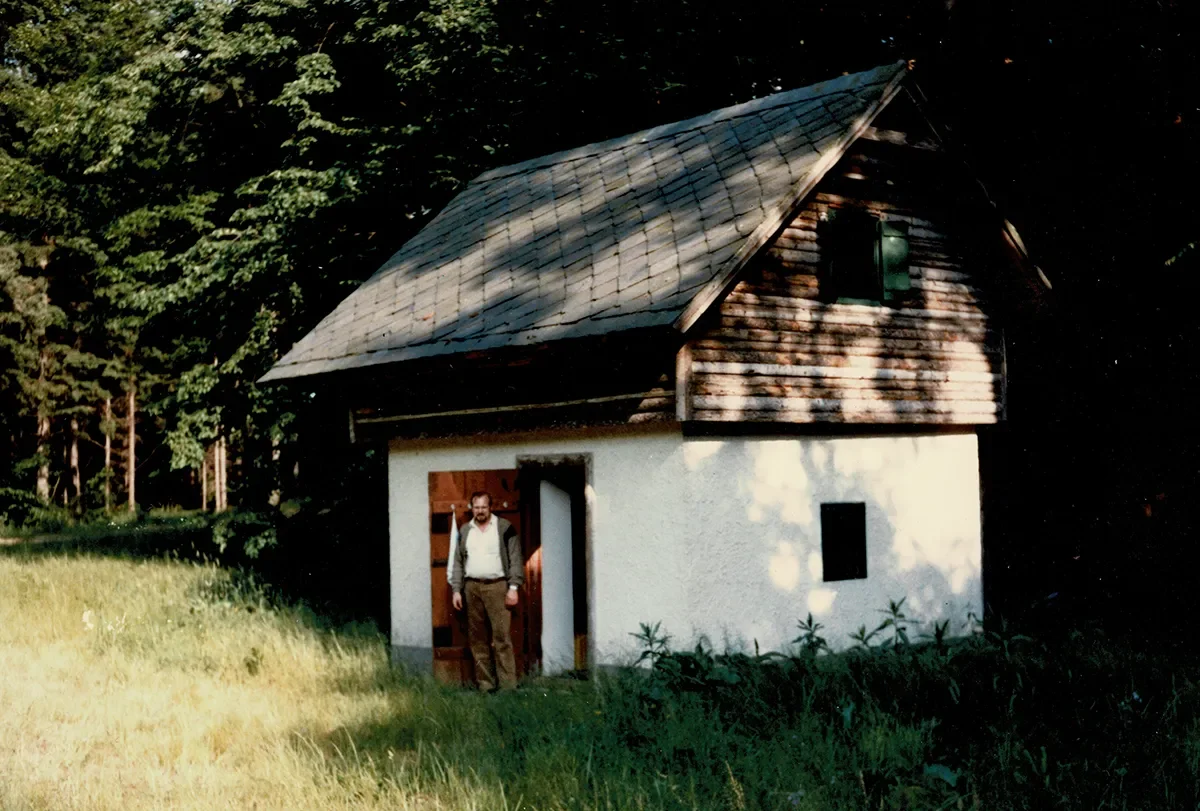
Our Hunting Cabin
Hunting and Fishing
Hunting and Fishing were key to the hardship retreat. However, there is so much more to this. It is a humbling experience to hunt and fish. We can get into a philosophical discussion here about whether you should eat meat if you are not able to kill an animal. Anyway, hunting and fishing will teach you respect for life. Also, they teach you discipline and patience; there is no success in them without either. I learnt to hunt and fish, and even though I don’t particularly enjoy it and never did, I would not want to miss learning it. I also like the idea of being able to find and hunt food out in the wild. To be a good hunter, you need to understand the wilderness. My father was always very value-driven here. We did not use night goggles, silencers, or shoot out of the car. He always said that these practices are dishonourable. You are not giving the animal a chance to win the fight. For him and my forefathers, it was more than a sport. It was a tradition to be cherished. It was a rite of passage that connected us to the land.
Local Responsibility
As a family, we have always been involved in local philanthropy and local clubs, etc. We never engaged in local politics, though. I was the first to join the volunteer firefighters in the village. A bit of an unusual step for us. Anyway, what aristocratic families do very well is local engagement and responsibility and it is instilled early in the heirs. First of all, the kids are always taken along to all the events. And once I became old enough (18), my dad would ask me to represent us at some events. Nothing major, just an event here and there. I was briefed on how to behave at the events and also instructed not to engage in business discussions during them. When you show yourself in public, you will quickly have a bunch of people around you who want something from you. Being exposed to this early is a good lesson for later, when you actually have the power to say yes to the myriad of asks. When we give, we give intentionally. If you do not, then it will become inflationary.
Pocket Money
I had the smallest allowance in my whole class. And no, not when I went to boarding school, but while I was in the local school. I remember complaining to my father about it. He then calmly explained to me that I need to learn how to budget my allowance. And that if I want more allowance, I have to find a way to make money. Or I had to bring him deals that were too good for him to say no to. One example was my bicycle. I went with my nanny to buy a new bicycle, and the one I wanted was on a 70% discount, but it exceeded the budget by 30%. So I had to call my dad and convince him. I explained the features and how it is too cheap to pass by. He said yes.
Also, I would make sandwiches at breakfast and sell them in school. And later I started lending money, because people would rather wanted to buy sandwiches at the cafeteria. Apparently, my sandwiches were not as tasty. I would do chores at home as well, like mowing the lawn etc. My entrepreneurial endeavours continued into boarding school and when I was at university.

Photo by Annie Spratt on Unsplash
Sport & Music
Sport & Music have been part of aristocratic curricula for centuries. The goal is not to produce professionals here. This is training of the spirit. Those who can endure physical hardship can endure other forms too. Sport trains discipline, consistency, and the value of effort. I played football (soccer) and later Rugby, I practiced athletics and swimming. While my experience in sports may be excessive, I highly recommend some form of sport in a next-gen education.
Similarly, in music, I learned to sing and play the piano. Singing trains the vocal cords and teaches you to relax properly. I would have rather played the trumpet or drums, but sadly, I was not given a choice on the piano front. However, it still has an impact on you when you learn rhythm and music.
Experiences that sharpen skills
The fastest way to learn any skill is by doing it in a real-life setting. Classroom learning is often worthless once we get out. Under pressure, we won’t know what to do, only on paper. Ideally, you want your heirs to practice their skills in the real world. Without any trials to face, they will not attain the necessary skills before stepping up. And believe me, it is excruciatingly painful to attain the skills after stepping up. When the stakes are high, and mistakes are costly, making them is agonizing.
“A gem cannot be polished without friction, nor a man perfected without trials” - Seneca.
Personal Stock Portfolio
When would you say that it is time for your child to start their own stock portfolio? Not just their own portfolio that is managed by you, but truly their own. Owned by them and managed by them? In my case, I was 12 years old. Not only did I start investing, but I also had to take a loan from my father. It was at 1% interest rate. The loan was my 12th birthday gift. I had the option of no gift or a loan to invest in stocks. I know, great choice. There were some rules to it. I could only invest in Austrian stocks and no more than 15% of the money into a single stock. I also had to pitch my dad each investment beforehand. I had to present why I wanted to invest and what my plan was. My father never turned down any investment. When I was older, he revealed that the pitch was there for me to think about the investments. He even let me invest in a stock that was obviously about to go bankrupt, and it did. At the end of the day, I made enough to buy a gaming PC. My dad was a bit sad that once I had the money to pay his loan and buy a PC, I liquidated the portfolio and made my purchase. He was disappointed that I killed the compounding engine for a toy, but he respected the contract. That lesson—that liquidity has an opportunity cost—stuck with me more than if he had just forbidden it. I did get back into it when I turned 16 and had some money from my other entrepreneurial activities. My dad is not the only one who does this; I have even heard about 9-year-olds having their own portfolio with similar rules.
Internships & Apprenticeships
Internships are a great tool to sharpen an heir’s skills. Additionally, apprenticeships are a powerful way to acquire the necessary knowledge. Internships can be at your own company or at other families’ companies. In many families, an heir has to run through a training program in their own family company. This is done throughout internships in the holidays at the firm. This often starts at the age of 14 when you can legally begin working as an apprentice or intern. Some even make the heir do an apprenticeship in the subject matter of the family firm. I was in boarding school, so my father tried to get me to do an apprenticeship in forestry in addition to my studies in mechanical engineering. By then, it was too late to force a 19-year-old’s interest. The window for forced exposure closes in the teenage years. I know of families where they do not allow family members to hold shares in the family business unless they have gone through the training program in the firm. The clue here is that they learn to be a responsible shareholder who understands the business inside out.
What worked much better in my case was that, starting at the age of 10, I did guided tours in our castle and palace. We ran a private museum in each. It was a great way to improve my pocket money through tips and it got me to learn the family history. The family history is best taught by the grandparents. In my case both my father’s parents died before I was born. And whenever my parents tried to teach me family history, I would get bored and stop listening. With the guided tours, I had another incentive to learn the history. It is not as great as listening to the grans, but it was a good replacement.
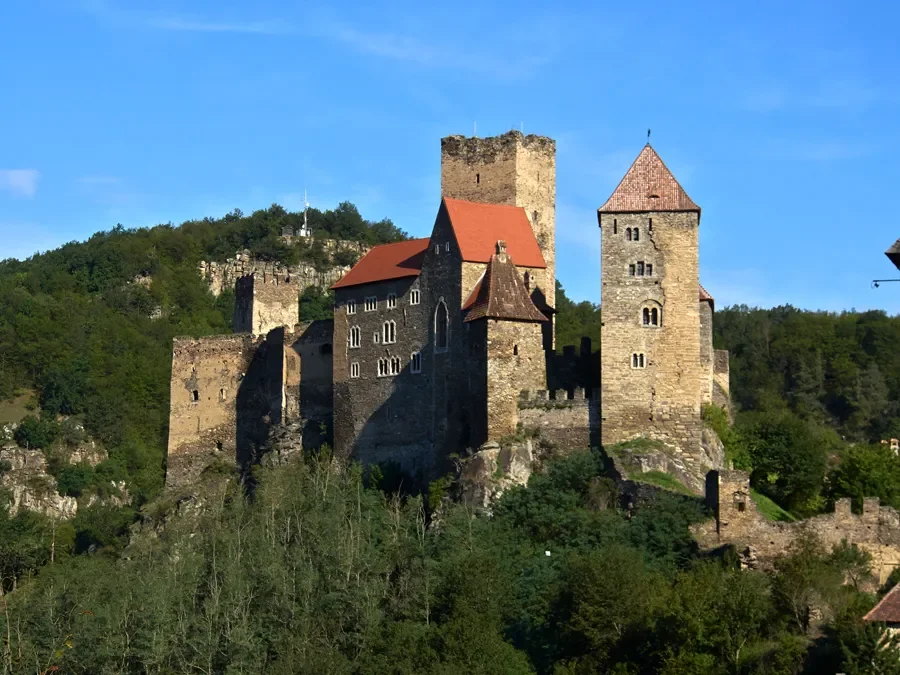
Castle Hardegg (www.burghardegg.at)
Take your kids to work days
In many families, the parents disappear off to work and leave the kids with their nanny and then you see each other again at dinner. This only creates resentment. The child of a friend of mine hated the family business. He did not understand it for a long time, till one day he asked. The answer was “Daddy, the company takes you away from me. I hate it.” Powerful words. After that, he started to take his son with him to work even though he was still in primary school. Take the kids along from time to time. Give them something to do. Have them sit in on meetings and take notes (even if they will not make any sense whatsoever). Have them come along to negotiations and business meetings. And ask them to observe. They are like a sponge. Not only will they learn from you directly, but they will also observe the other people. Ask them after the meeting what they think. Encourage them to weigh in on their opinion. You can always ignore it afterwards, but I guarantee you will be surprised by the clarity of their observations. They see things we have learned to ignore.
Attending Events
Have your next gen attend events of peers. Be it birthday parties or whatever. Networking starts early, and the connections we form with people in childhood are often for life. Host your own events for them, where you invite the children of peers. There often is a world of its own. In aristocratic tradition, there usually is a ball organized for your 18th birthday. It is an experience that not only the birthday child, but also his friends will remember for life. Friends of mine and I still speak about our balls to this day, and the memories that we still have. Having them attend these events also hones their social skills. They have to learn etiquette before and apply it at the event. They have to learn to make small talk. But also learn with whom and when to open up. Guide them here, particularly in how to select their friends. IF you have a wealthy background, there will always be people who want to get close to you for the wrong reasons. The earlier they learn this and gain experience here, the better. Later on in life, these experiences can be rather expensive.
What is Next?
Next week we will cover how your heirs can master the tribe. How they will attain decision-making skills and leadership skills. And how you can leverage group activities in the family to learn this and to strengthen familial bonds.
Stay tuned, and in the meantime, please share and subscribe to my publication!